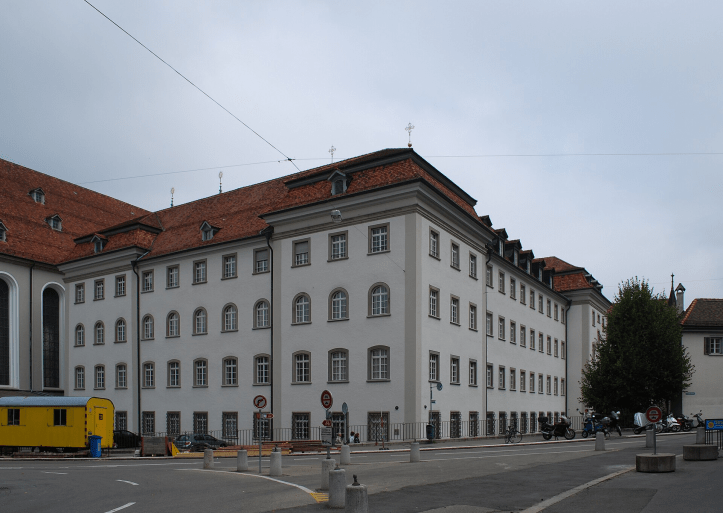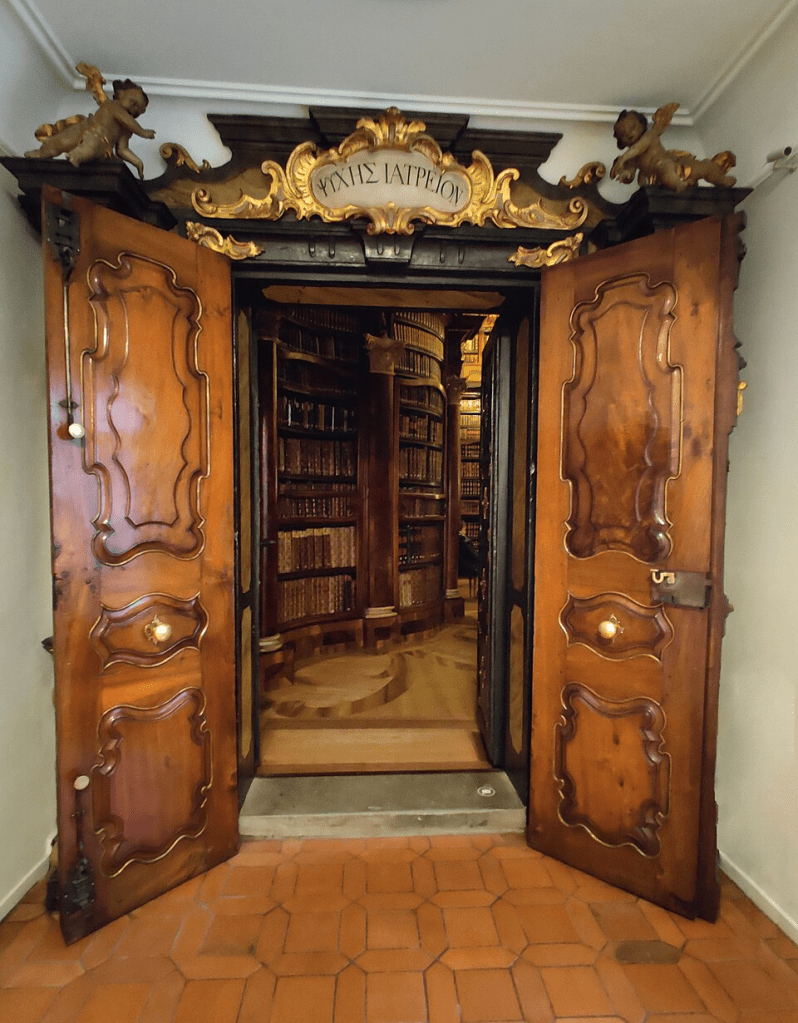
By Gre regiment – Own work, CC BY-SA 4.0, /commons.wikimedia.org/w/index.php?curid=127195265
Saint Othmar founded the Abbey of St. Gall and its library in 719. During a fire in 937, the Abbey was destroyed, but the library remained intact.
The library hall, designed by the architect Peter Thumb in the maximalist Rococo style, was constructed between 1758 and 1767.
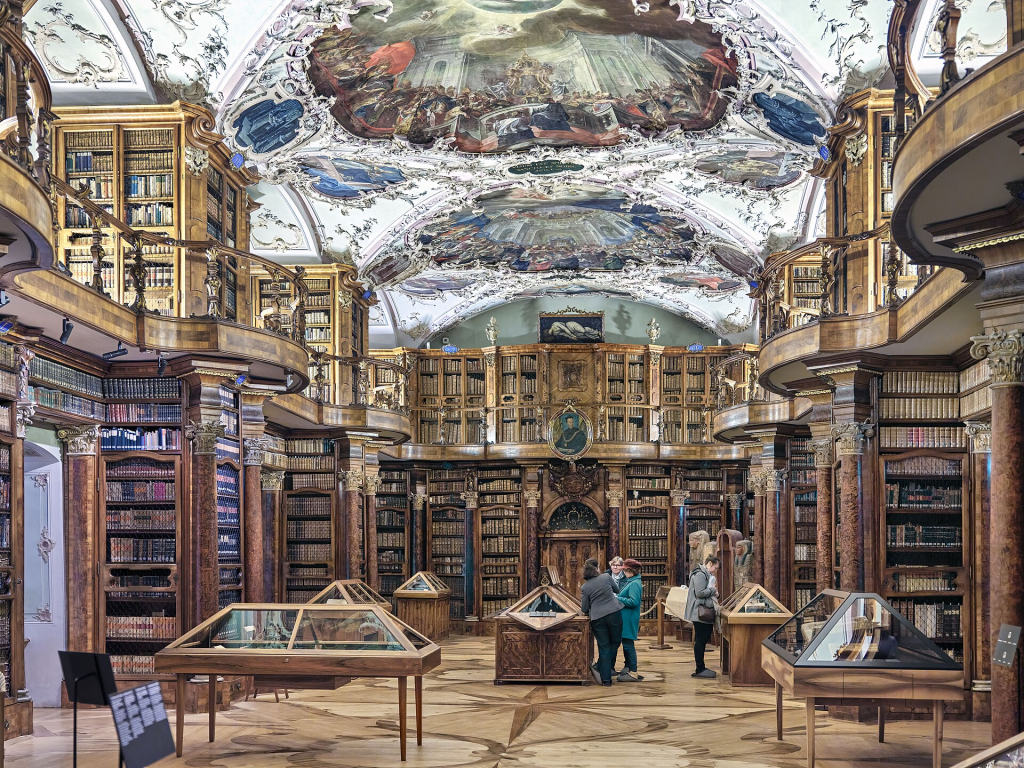
By Roy Egloff – Own work, CC BY-SA 4.0,commons.wikimedia.org/w/index.php?curid=147393411
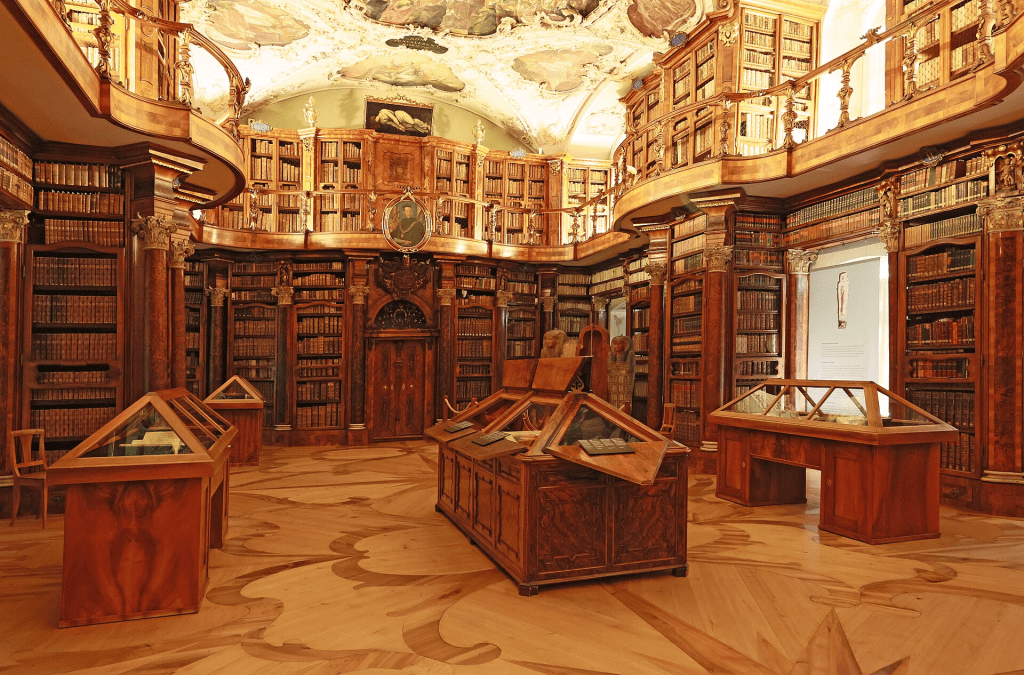
By Elena Ternovaja – Own work, CC BY-SA 3.0,/commons.wikimedia.org/w/index.php?curid=132289224
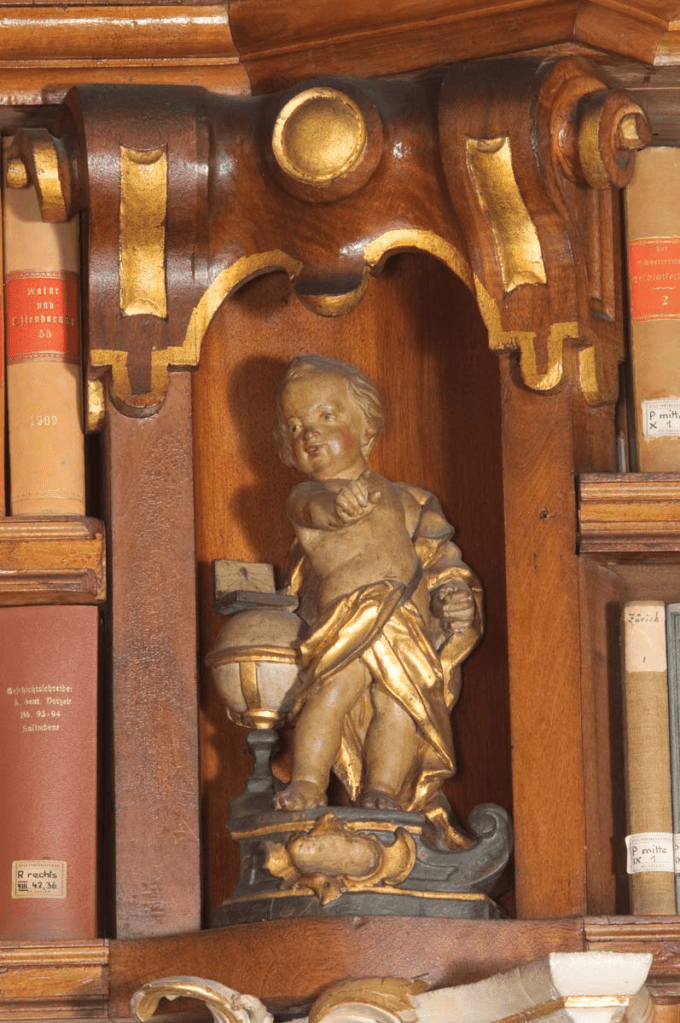
By Stiftsbibliothek St.Gallen,/commons.wikimedia.org/w/index.php?curid=31031602
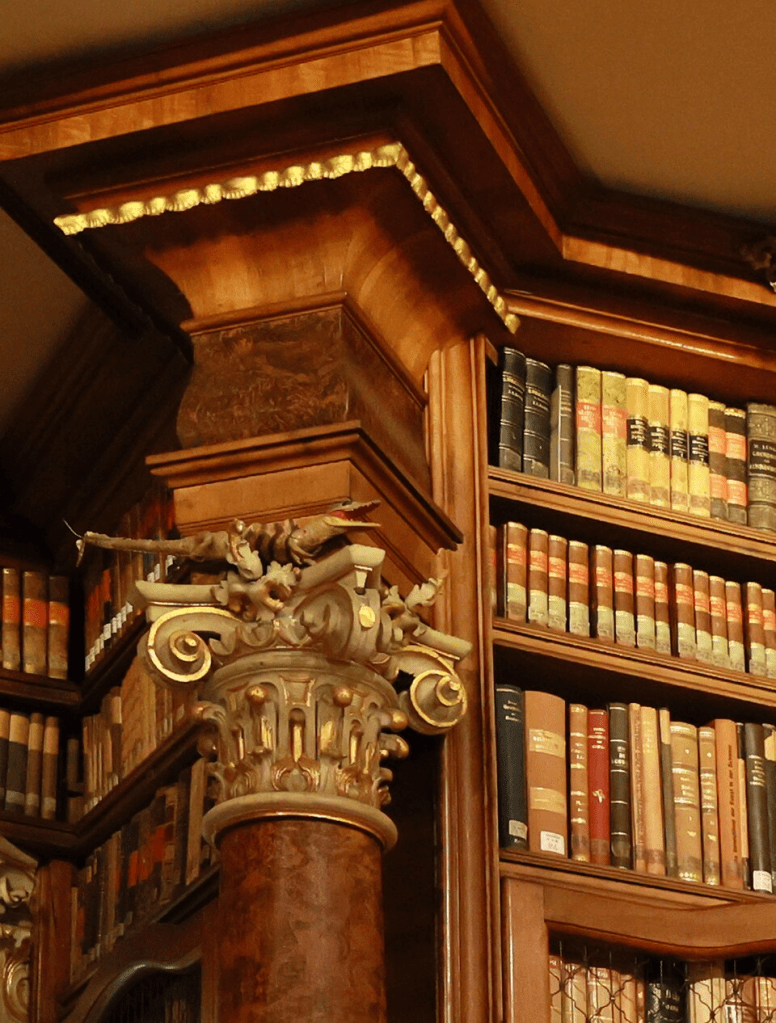
By Elena Ternovaja – Own work, CC BY-Scommons.wikimedia.org/w/index.php?curid=132293369
According to A. C. Williams at Electrum Magazine: “”Around the year 612, the priest-monk Gallus (c. 560 – c. 650), retired from his travels with the Irish monk, Columbanus (540-615), and settled in the Steinach Valley near Lake Constance. There he built a hermit’s cell and oratory that later served as a meeting place for his growing band of disciples. Around 719, the Alemanni priest Othmar (c. 689 – c. 759) expanded the by now well-visited hermitage of Gallus (canonized as St. Gall) into the Abbey of St. Gall. By the request of Karlmann, Ruler of the Franks, in 747 the Abbey began to follow the Rule of St. Benedict and Othmar became the first abbot of St. Gall. He was later canonized as St. Othmar in 864.“
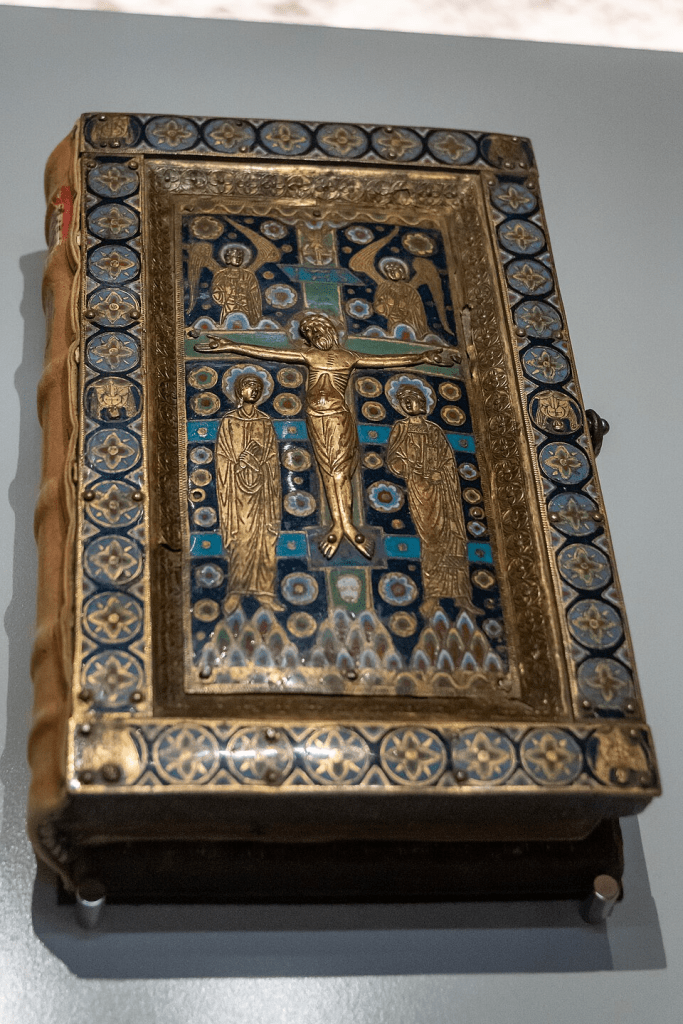
By Rainer Halama, Public Domain, .wikimedia.org/w/index.php?curid=132828822
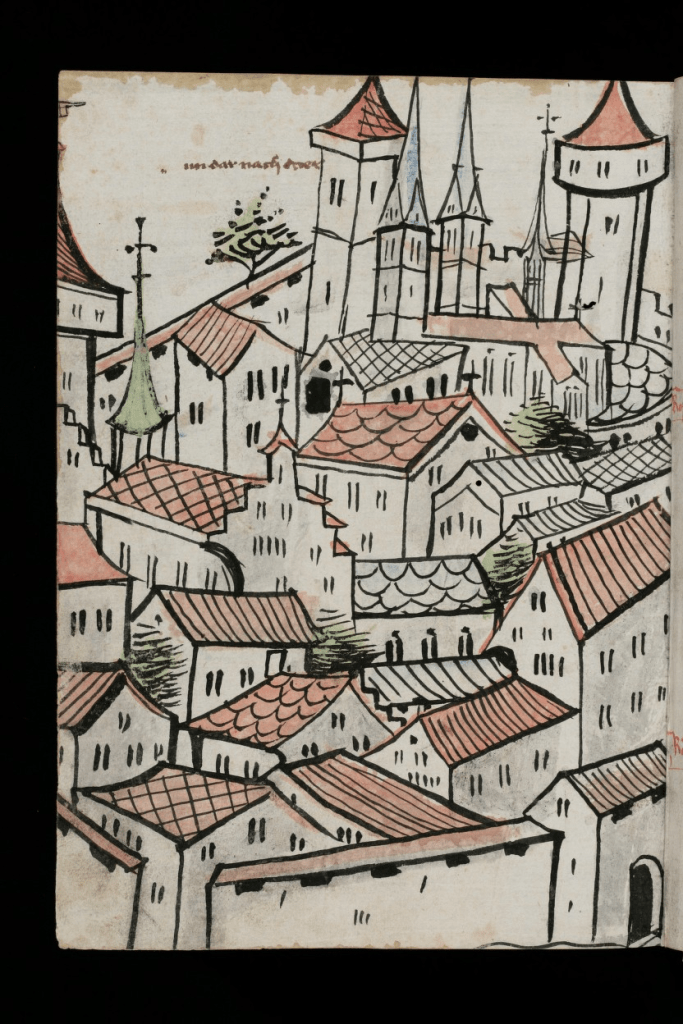
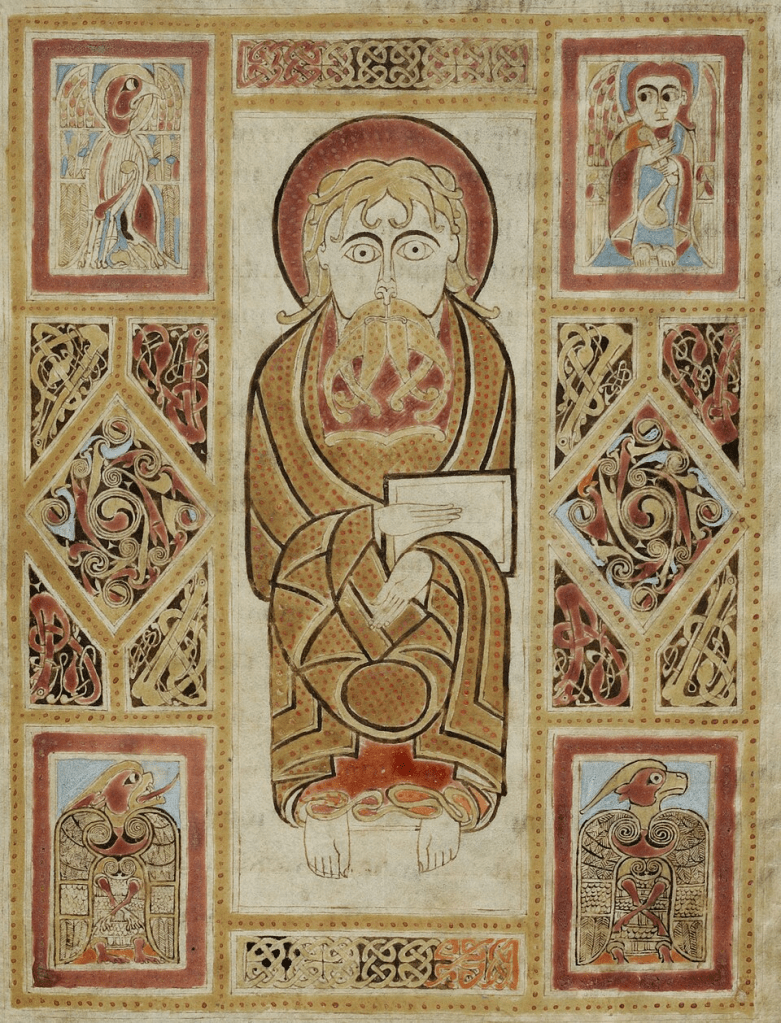
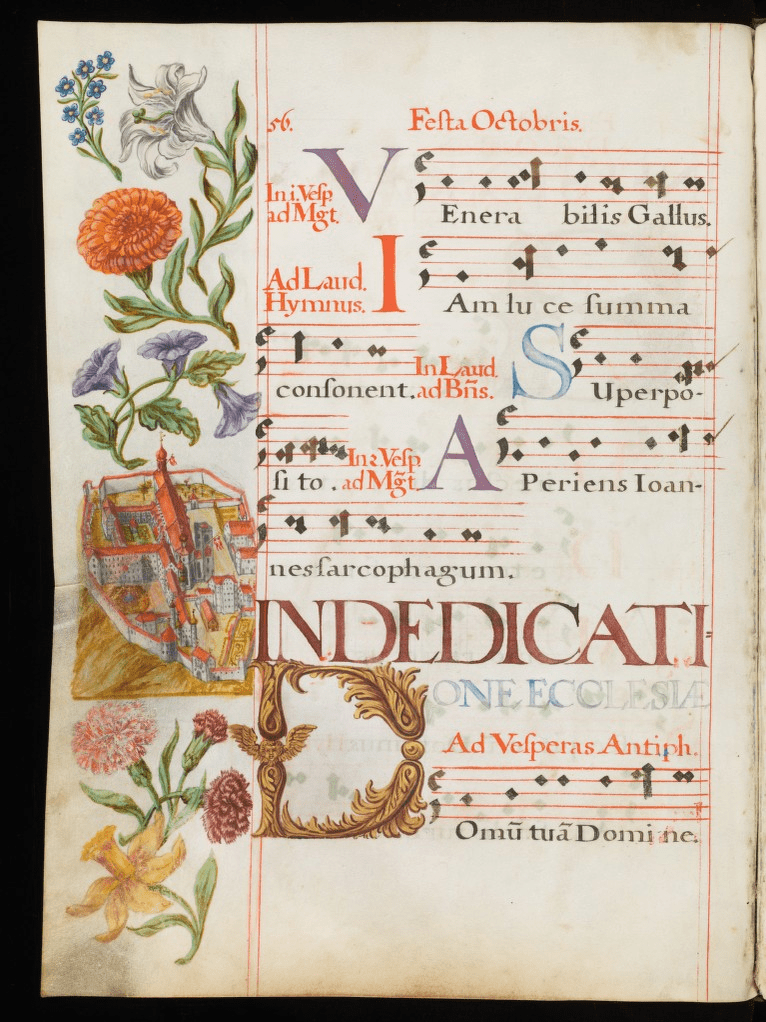
By Ag7849 – Own work, CC BY-SA 4.0, commons.wikimedia.org/w/index.php?curid=66939710
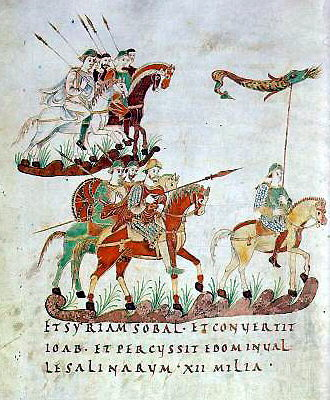
Psalterium Aureum, Joab leading the Hebrew cavalry against the Syrians
It houses replicas of famous globes, including the St. Gallen Globe (the damaged 1576 original is in the Swiss National Museum) by Tilemann Stella.
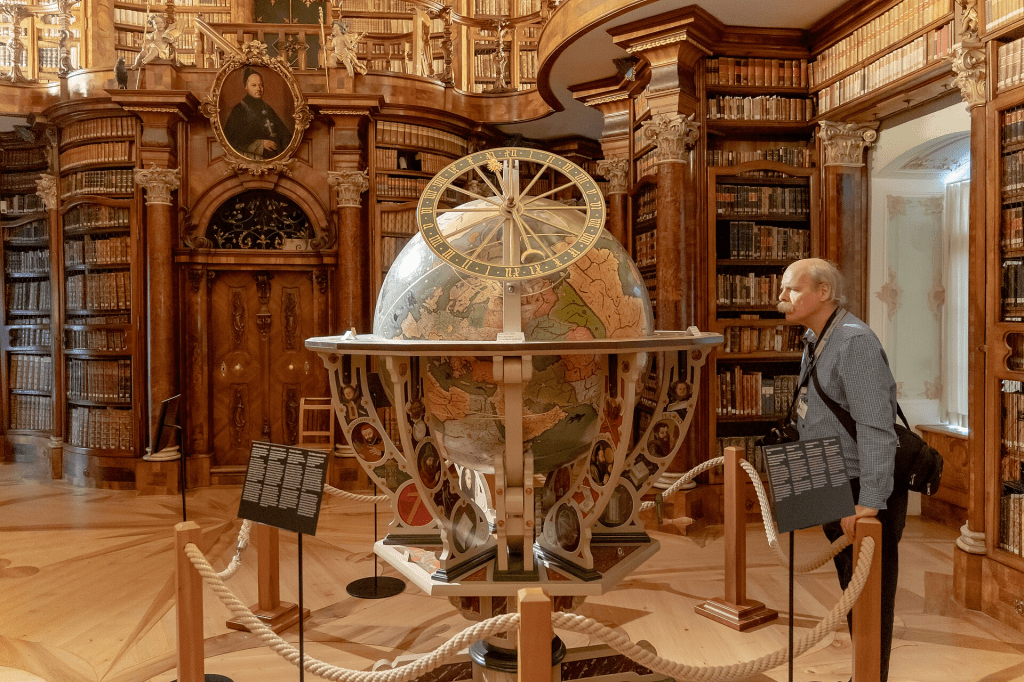
By Rainer Halama – Own work, CC BY-SA 4.0,commons.wikimedia.org/w/index.php?curid=133058877
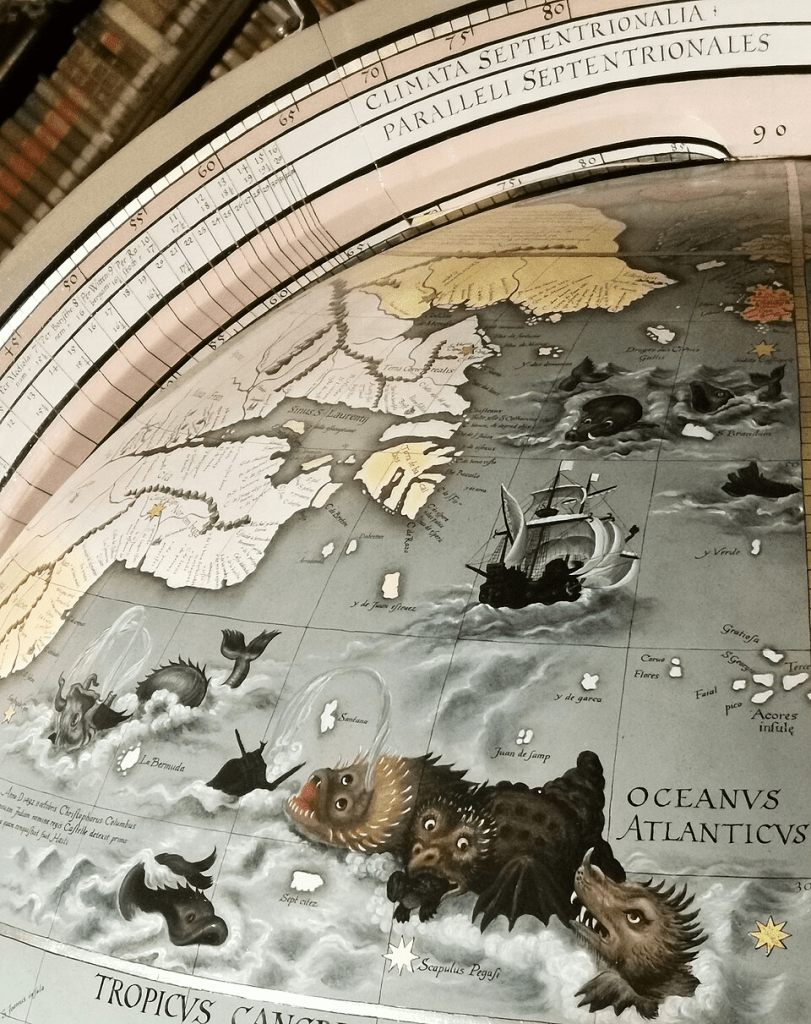
By Elena Ternovaja – Own work, CC BY-SA 3.0 ccommons.wikimedia.org/w/index.php?curid=132287835
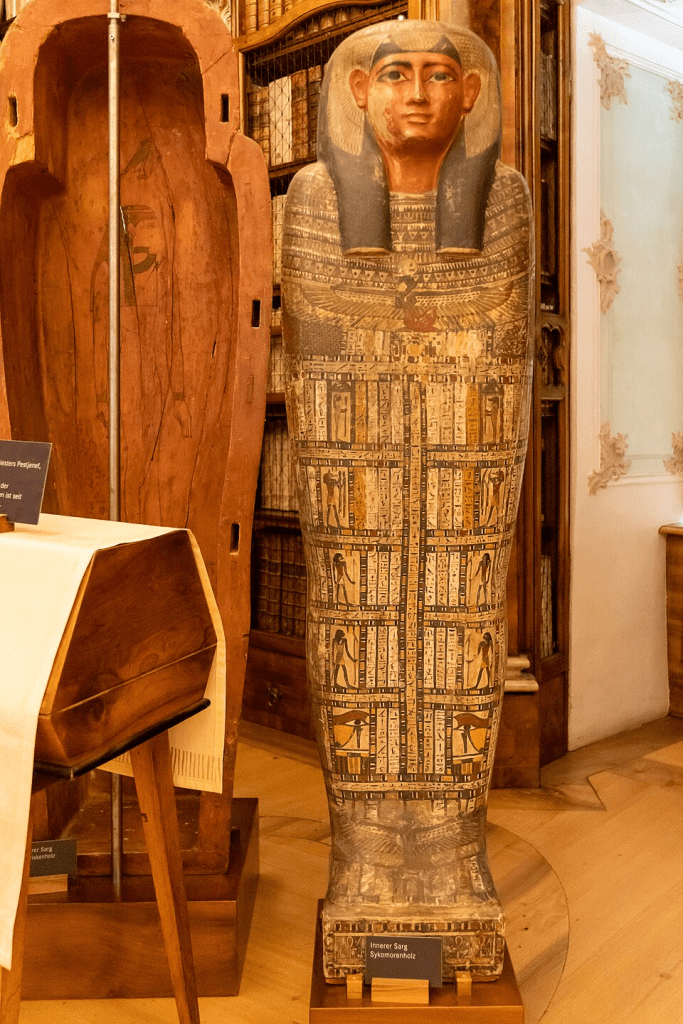
The mummy of Shep-en-Isis
Shep-en-Isis was born around 650 BC and died around 620 BC.
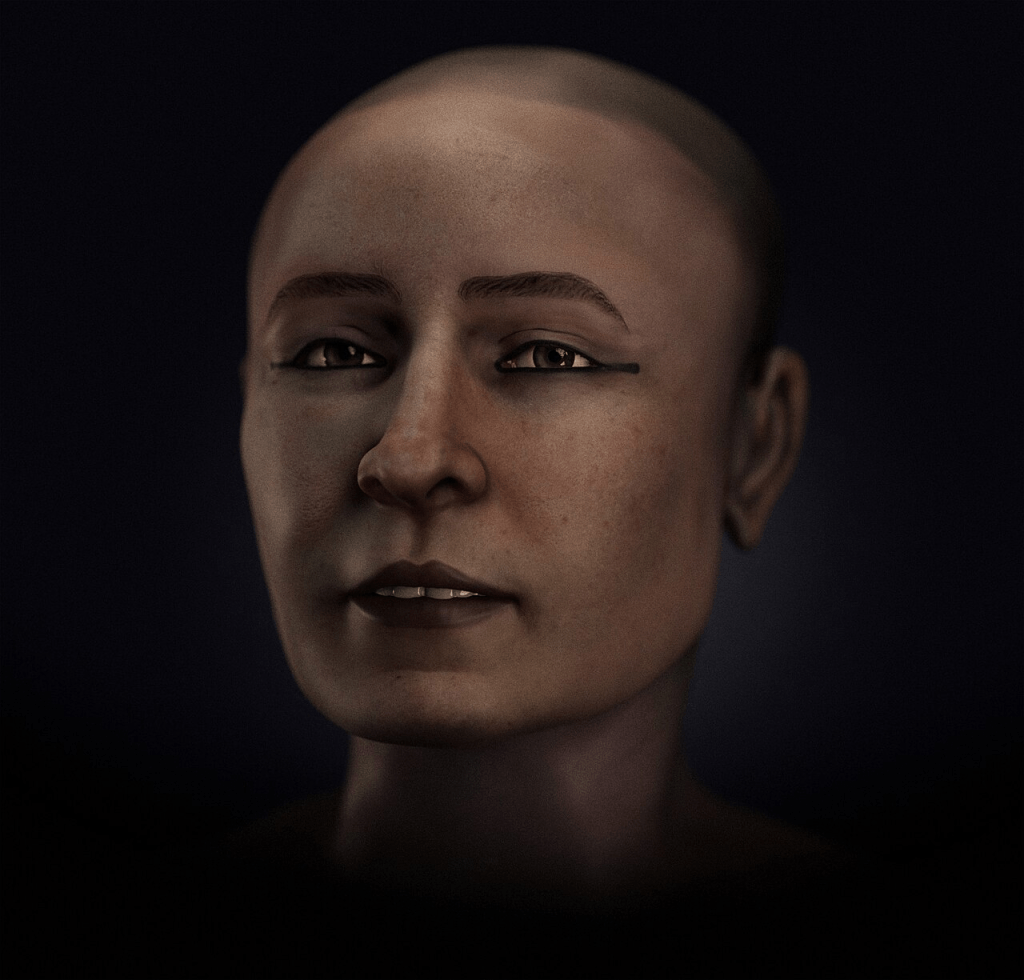
By Cicero Moraes – Own work, CC BY-SA 4.0 commons.wikimedia.org/w/index.php?curid=114649609
Among the many great books, codices, manuscripts, and other incunabula of this library, you can find gems such as:
The Plan of St Gall
It is the earliest-known architectural plan on parchment and the unknown author’s ideal of a Benedictine monastery: church, cloister, hospital, school, gardens, workshops, kitchens, bakery, brewery, guest houses, animal facilities, and cemetery. It was never built.
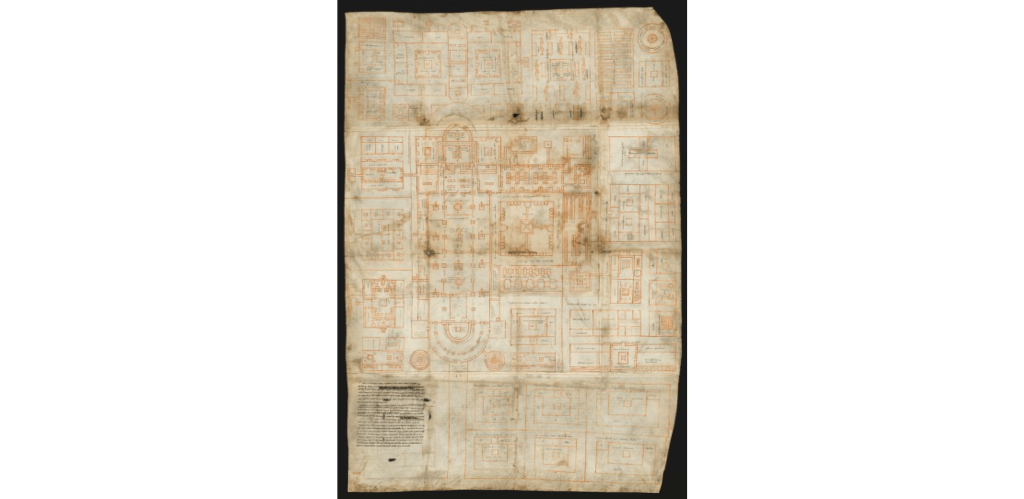
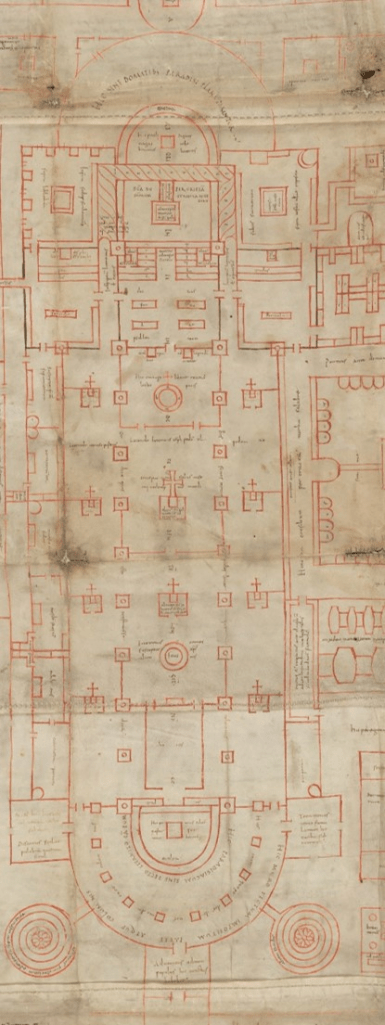
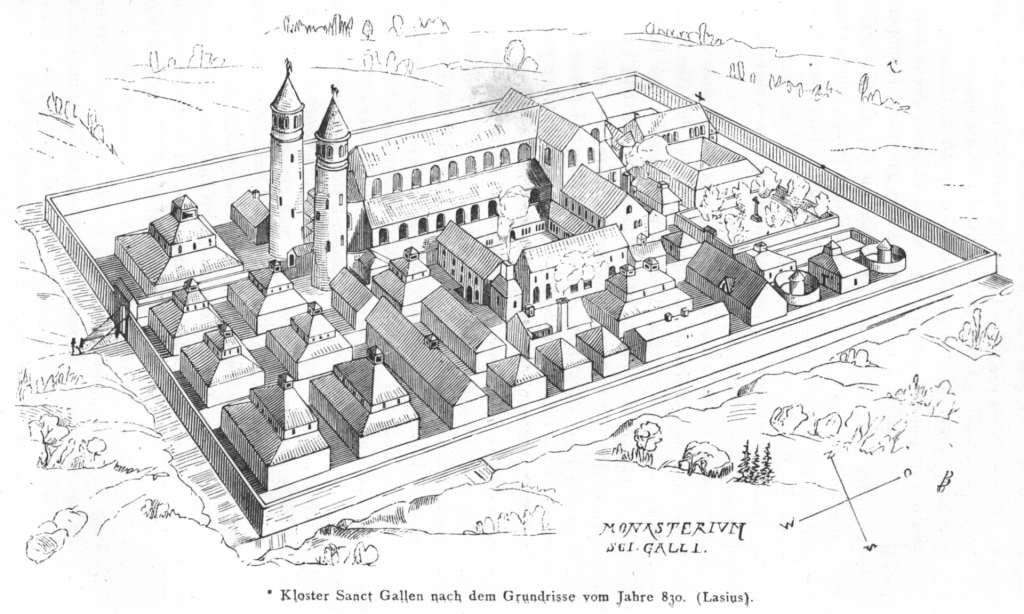
The Plan of St Gall at e-codices.ch
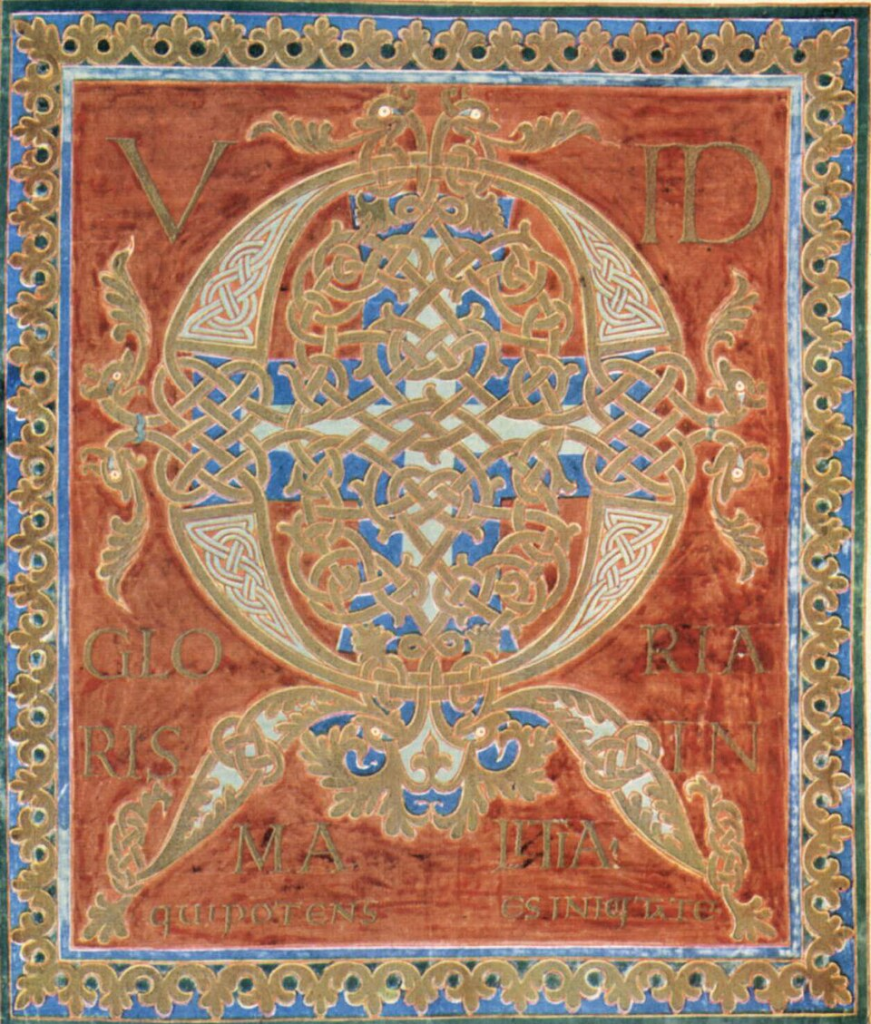
Evangelium longum
The text of the Evangelium longum was written down by the monk Sintram, of whom it was said that “his fingers were admired by all the world” and that his “elegant writing’s consistency is captivating”. The monk Tuotilo was trusted with the adornment of the plates.
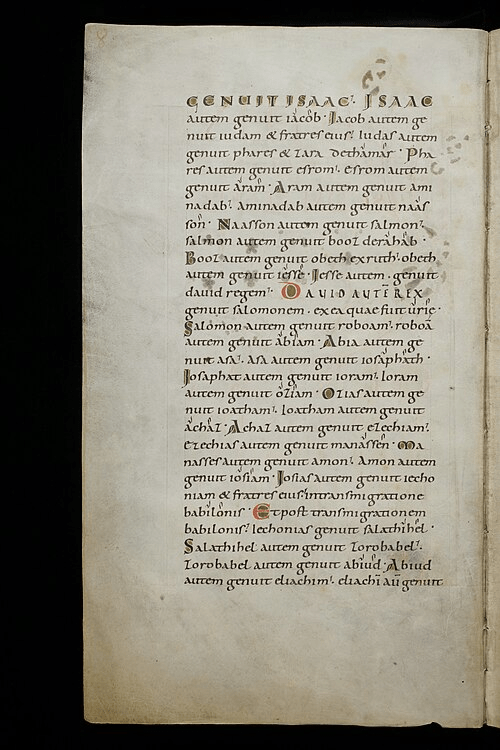
Evangelium longum @e-codices.ch
Saint-Gall Cantatorium
The manuscript contains solo Mass chants and uses extremely refined neumatic notation. It is described as the earliest complete surviving musical manuscript with this kind of notation and remains a major source for reconstructing Gregorian chant performance.
The notation is something halfway between writing down music and writing instructions for remembering music already known.
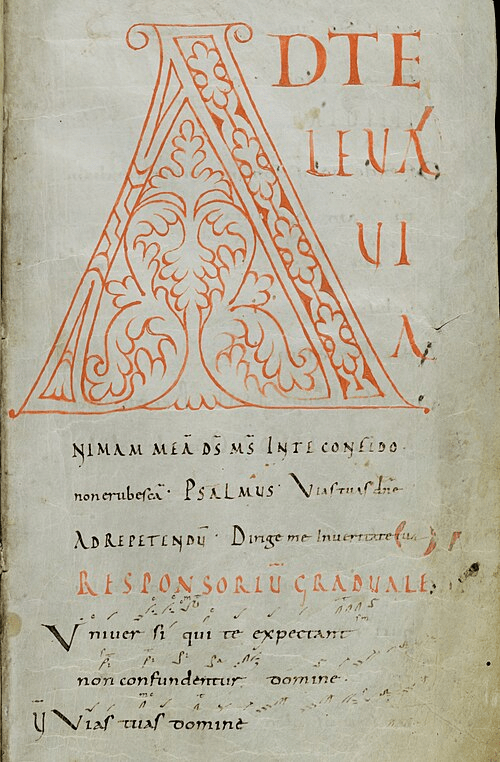
The Folchart Psalter
The scribe Folchardus painted the glorious illuminations.
Sortes Sangallenses
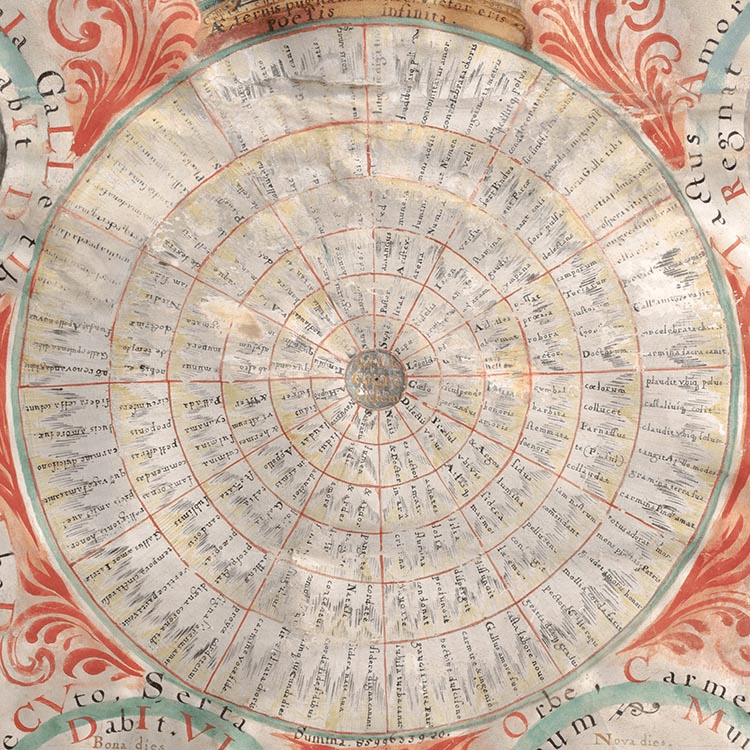
The Sortes Sangallenses (4th–5th century CE) are a collection of 525 divinatory responses fragmentarily preserved in Codex Sangallensis 908.
According to Gent University‘s Giovanbattista Galdi, these texts function through a consultation method. A petitioner would draw lots to receive a combination of numbers or letters, which would lead them to a specific response in the oracle book. The responses themselves are often categorized by the social standing or intent of the client (such as slaves, travelers, or those seeking financial fortune) and provide either reassuring or cautionary advice. (see How does a late antique oracle speak? ).
A Manuscript is any text written by hand rather than printed.
An Incunabulum is a book printed in Europe during the earliest period of movable-type printing, conventionally through 31 December 1500. Plural: Incunabula.
Illuminated manuscript means a manuscript decorated with painted ornament called illuminations
A Codex usually means an ancient or medieval manuscript in book form, as opposed to a scroll.