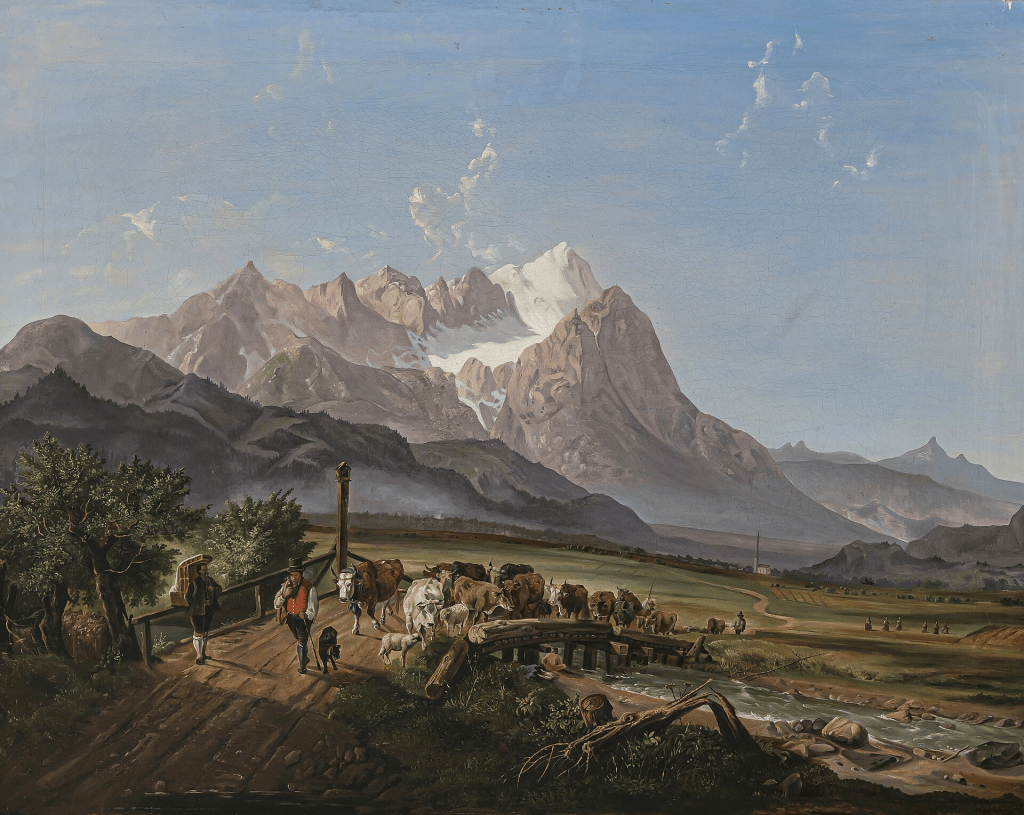
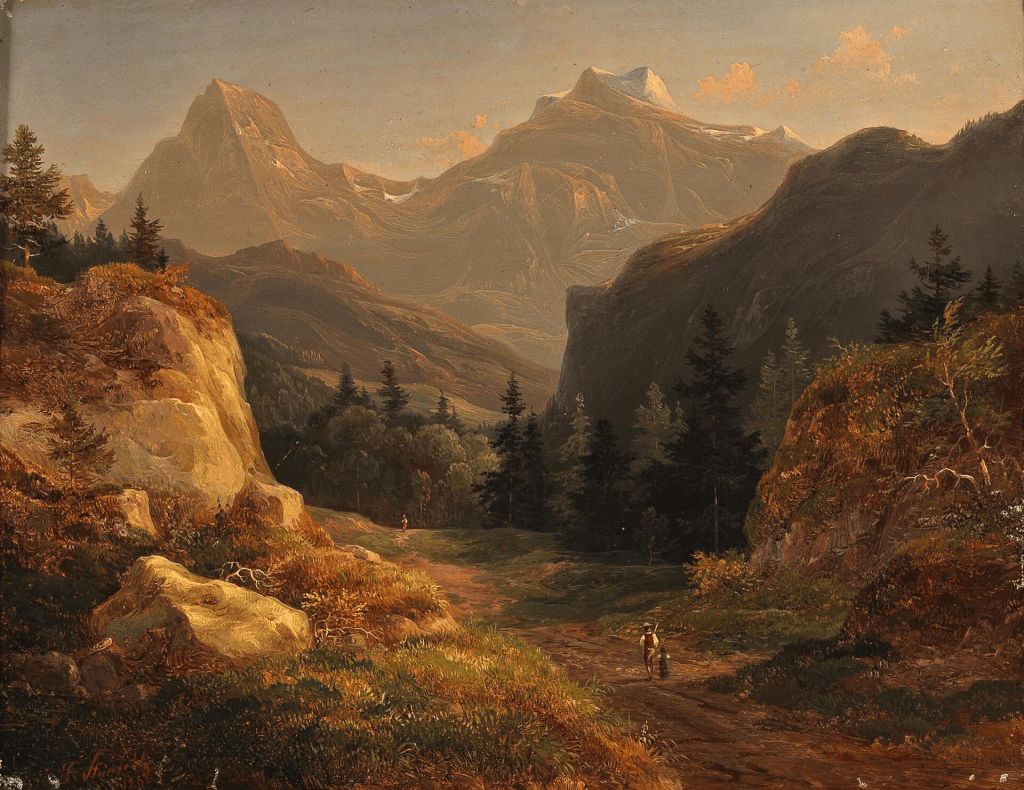
It is bewildering to think that mountain landscapes were not widely considered beautiful until relatively recently (by recently, I mean the eighteenth century). It was not that nature in general was thought ugly: a field could be beautiful, as could a church, a tower, or a bridge. But wild mountains and wilderness were more often seen as barren, frightening, or simply inconvenient. Mountains certainly appear in medieval and Renaissance paintings, but usually as backgrounds to religious or historical subjects.
A spectacular exception is Konrad Witz’s The Miraculous Draught of Fishes (1444). Witz relocates the biblical story to Lake Geneva and paints an identifiable local landscape. Learn more in our previous post Jesus walks on Lake Geneva.
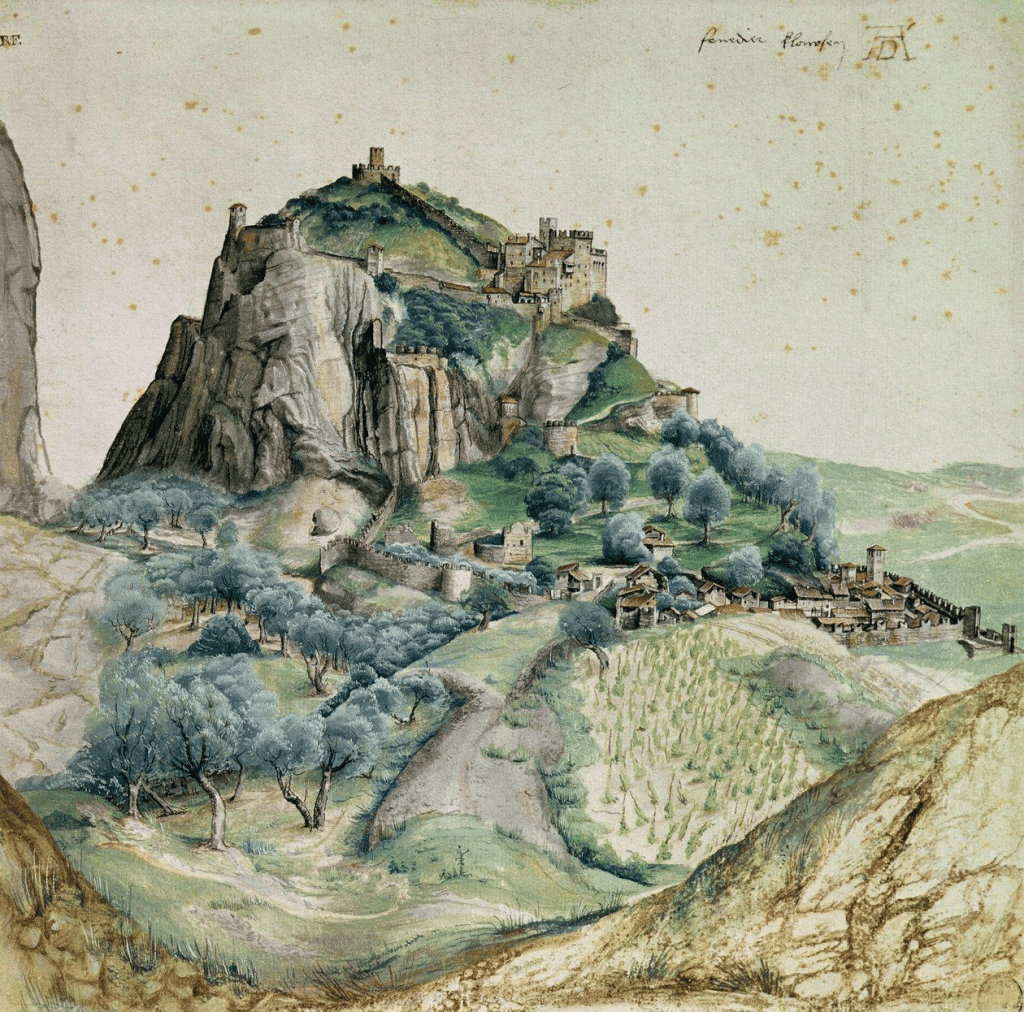
Another is Albrecht Dürer. During his travels around the 1490s he made remarkably observational watercolors and drawings of places including Innsbruck.
Something changed with the Enlightenment, when writers such as Jean-Jacques Rousseau and Albrecht von Haller began to imagine the mountains as places of natural freedom, authentic simplicity, and even a kind of return to Eden. In the sciences, geology was making enormous strides, and many of those discoveries took place in the mountains. Early Alpine painting accordingly has a great fondness for rocks, glaciers, and exposed geological forms.
Early German Romanticism sought in mountains what came to be called the Sublime. The Sublime had to overwhelm: a giant abyss, a towering mountain, a violent storm. Romanticism looked for emotion in vastness, danger, solitude, and the forces of nature.
All of this combined to make painters look at the wild ranges of the Alps in a new way. Enters Caspar Wolf.
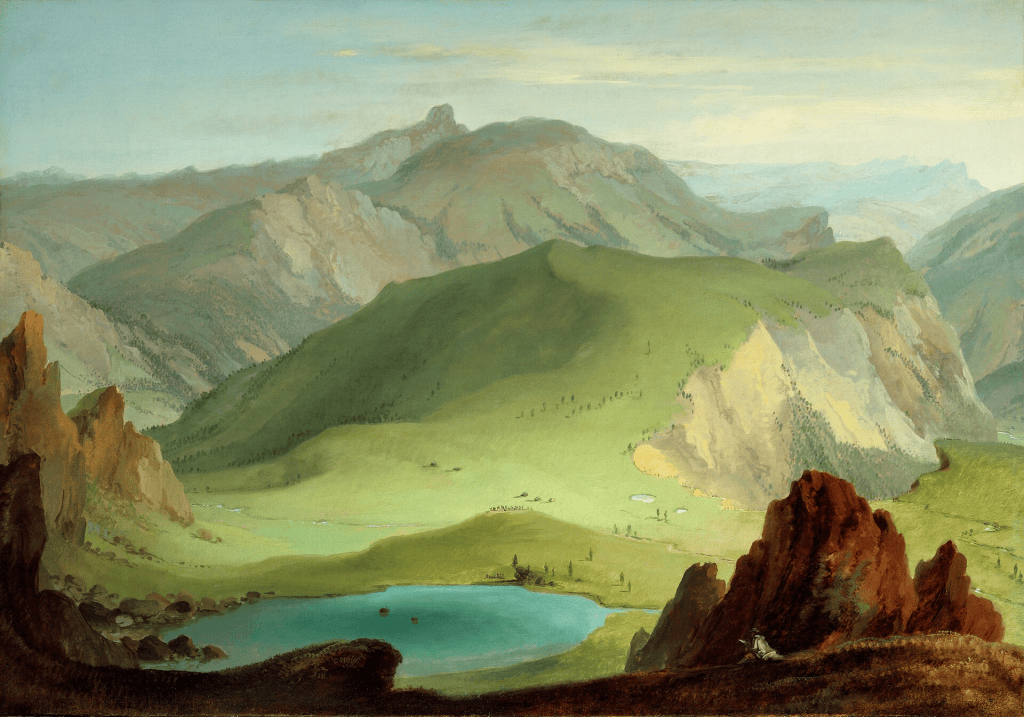
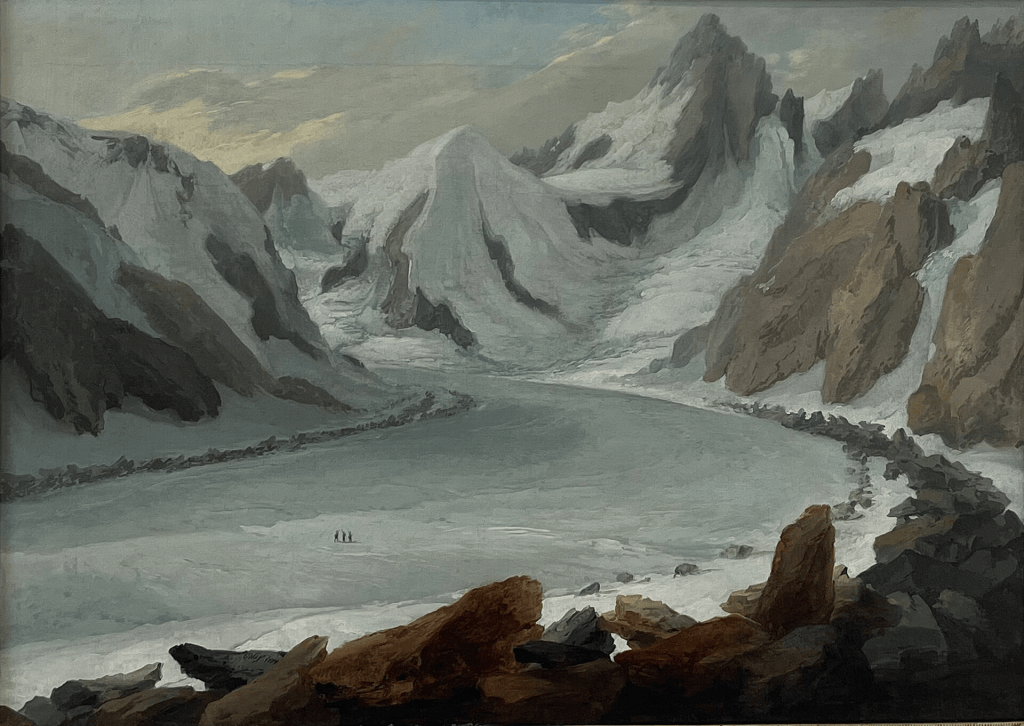
Caspar Wolf (1735–1783), Swiss
The pionner. One of the very first to choose mountains as his subject. In the 1770s he actually trekked into difficult Alpine terrain and painted what he saw. The mountain itself becomes the drama instead of the background of the drama. The most interesting part of the painting is not humans but minerals.
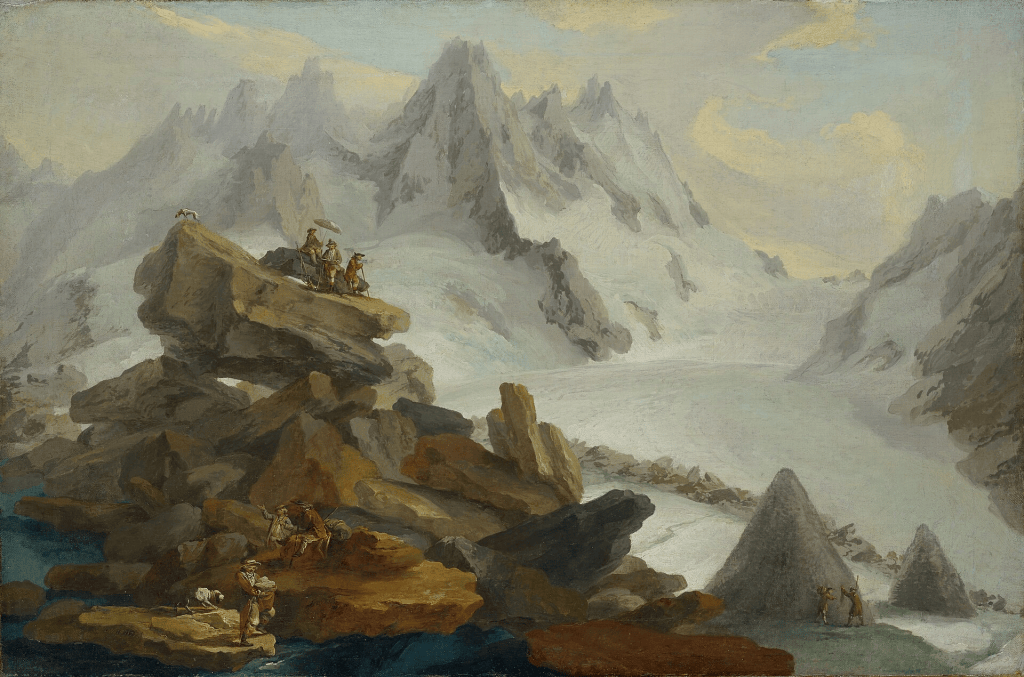
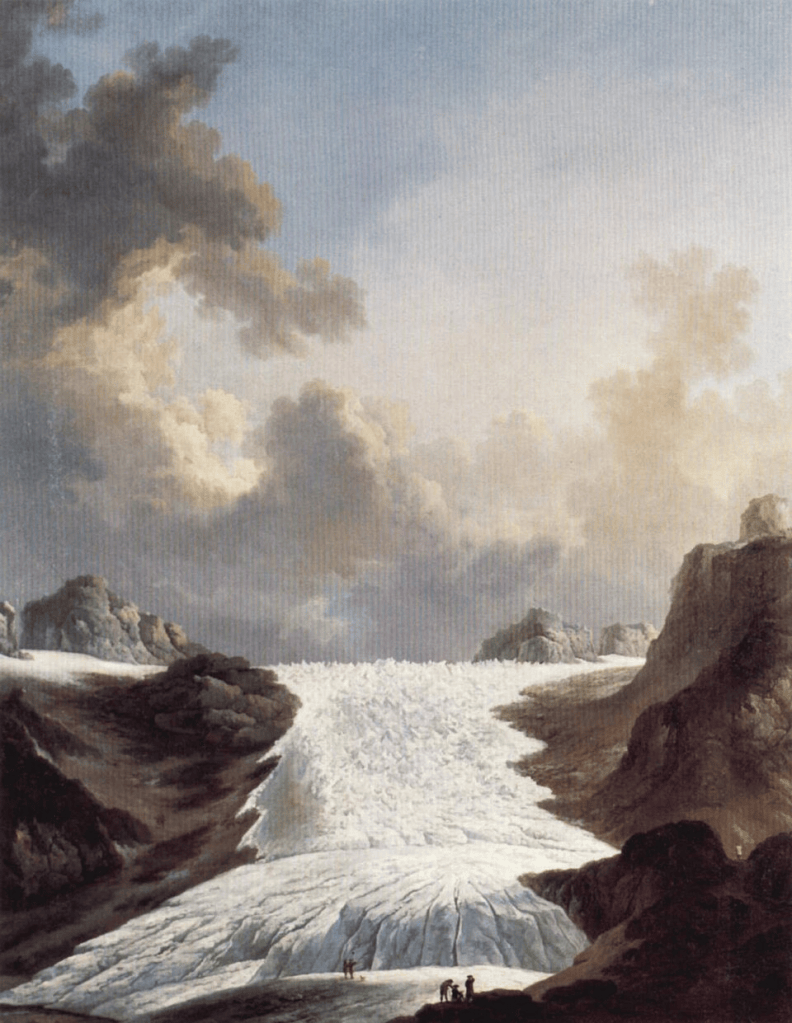
Johann Heinrich Wüest (1741–1821), Swiss
An important predecessor of Caspar Wolf. His Rhône Glacier paintings already use huge, rugged rocks and ice, and very small human figures to create the Sublime.
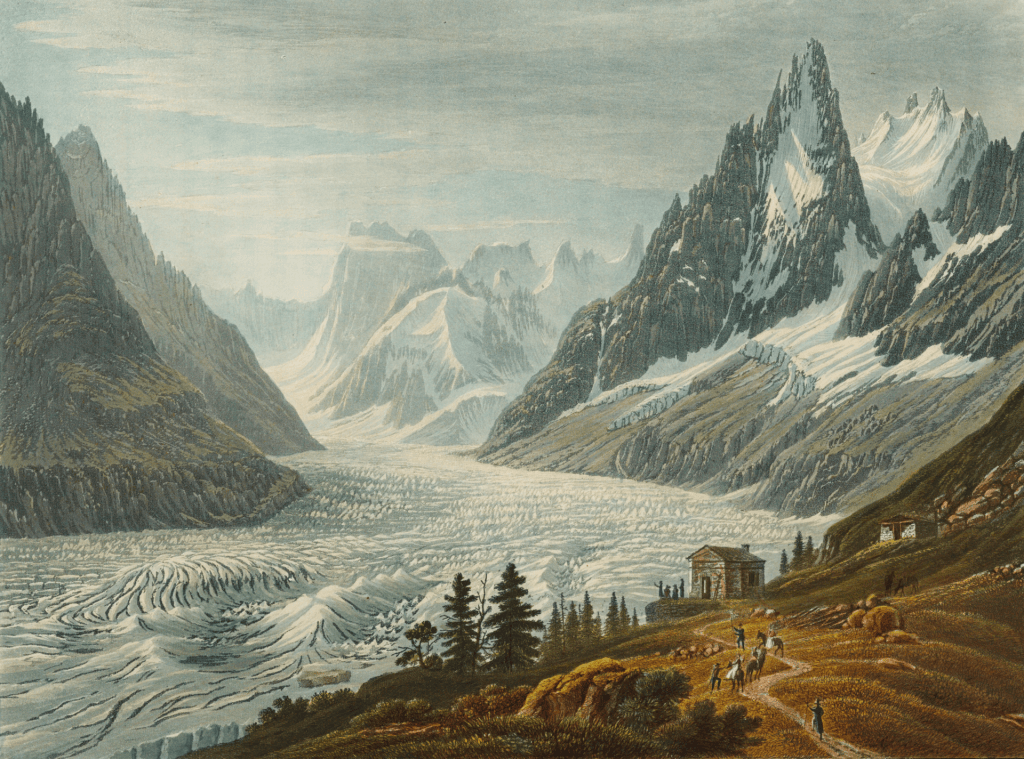
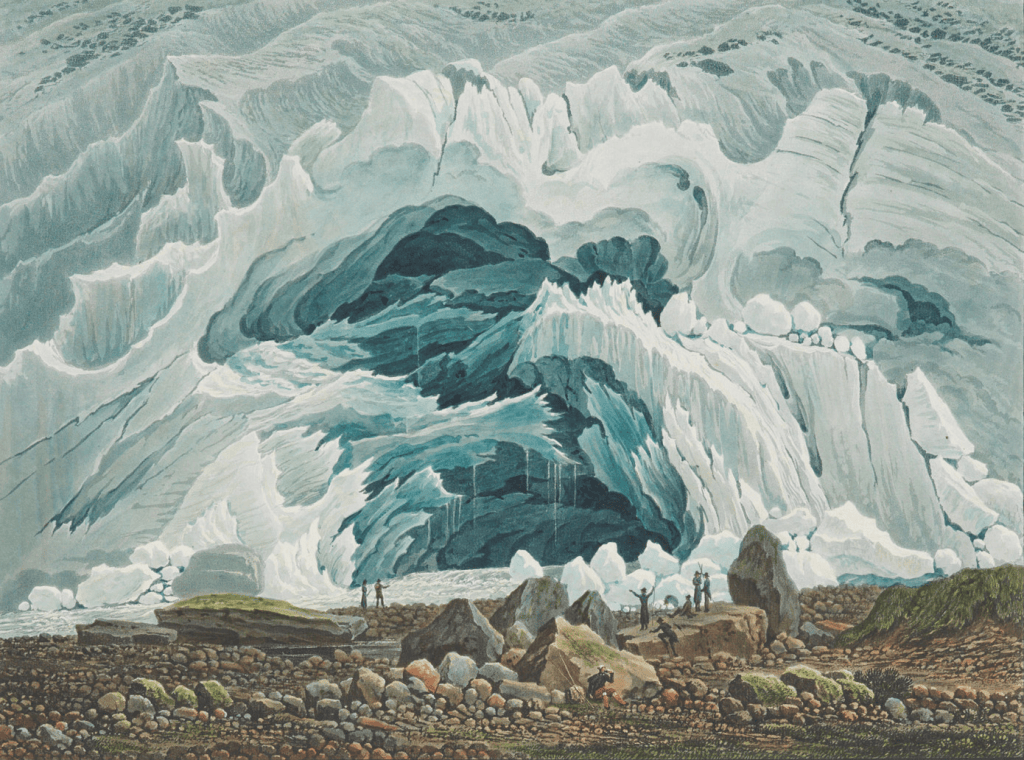
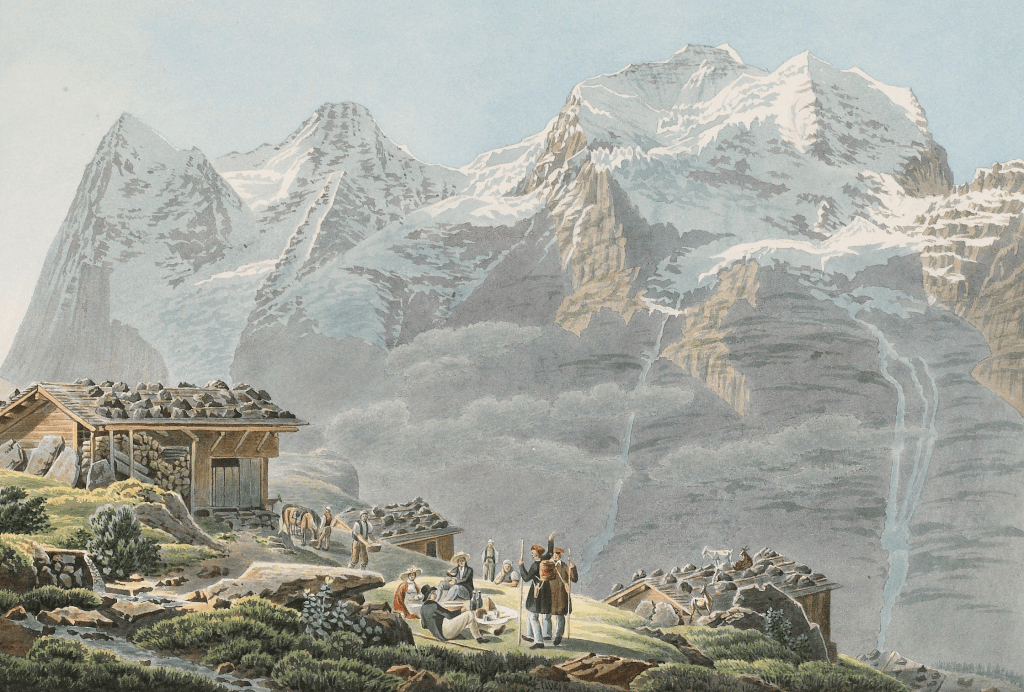
Samuel Birmann (1793–1847), Swiss
A transition figure, he was the son of landscape painter Peter Birmann. He trained with his father, traveled through Switzerland with geologist Peter Merian in Bernese Oberland, Valais and Savoy.
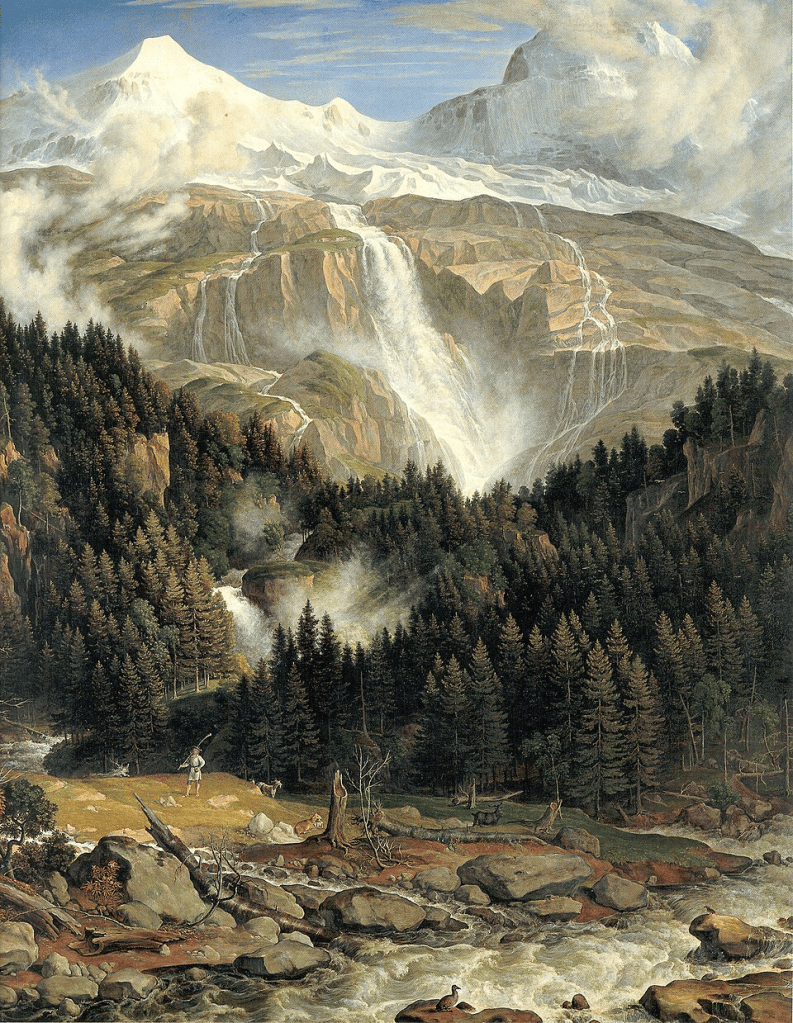
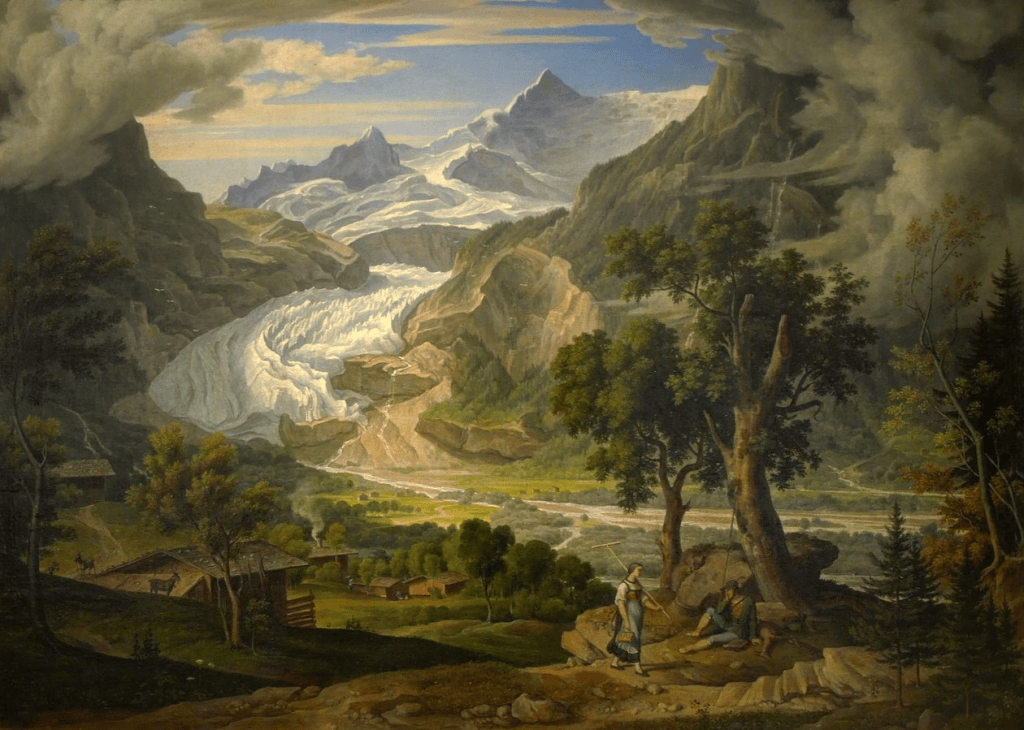
Joseph Anton Koch (1768–1839, Austrian)
His mountain landscapes combine real Alpine observation with idealized, Sublime composition. A major link between eighteenth-century ideal landscape and Romantic Alpine painting.
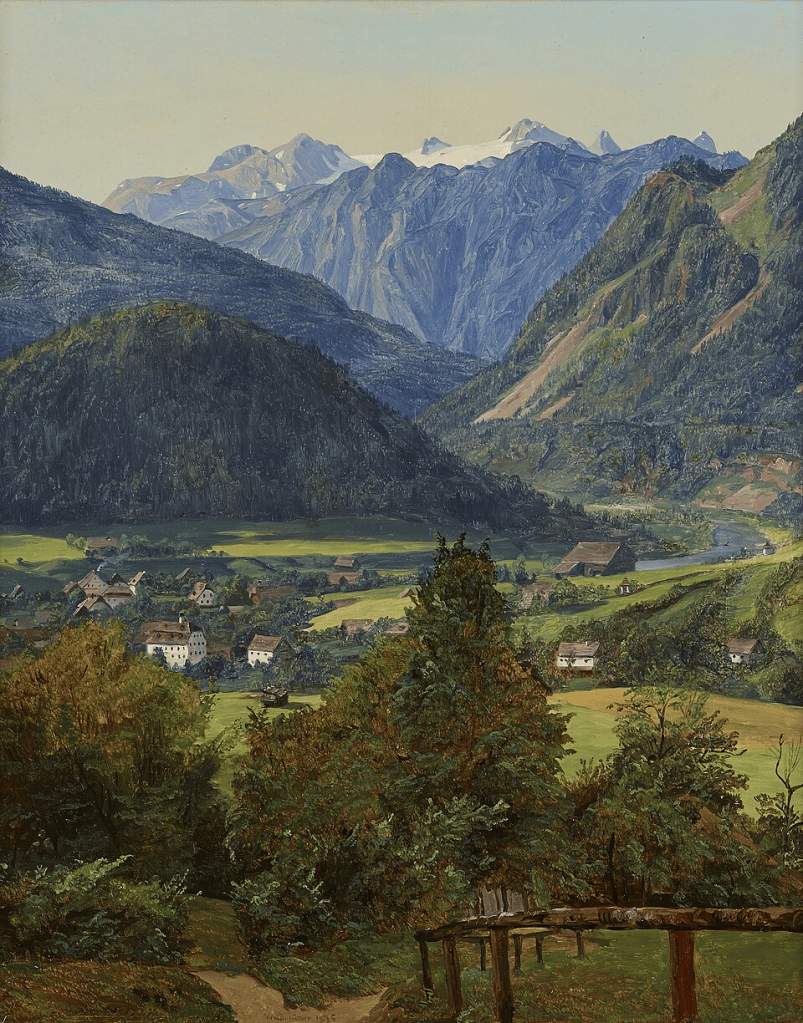
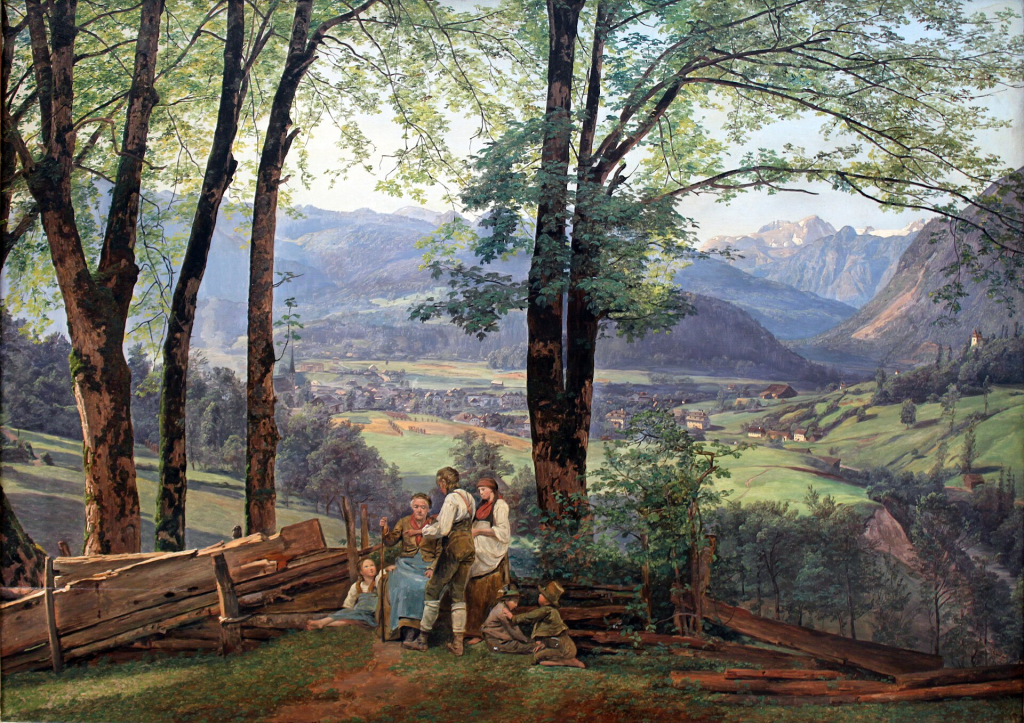
Ferdinand Georg Waldmüller (1793–1865), Austrian
Waldmüller is less theatrical and less Sublime. Aiming at clarity, he uses natural light, precise observation, and great spatial understanding. His mountains are tangible.
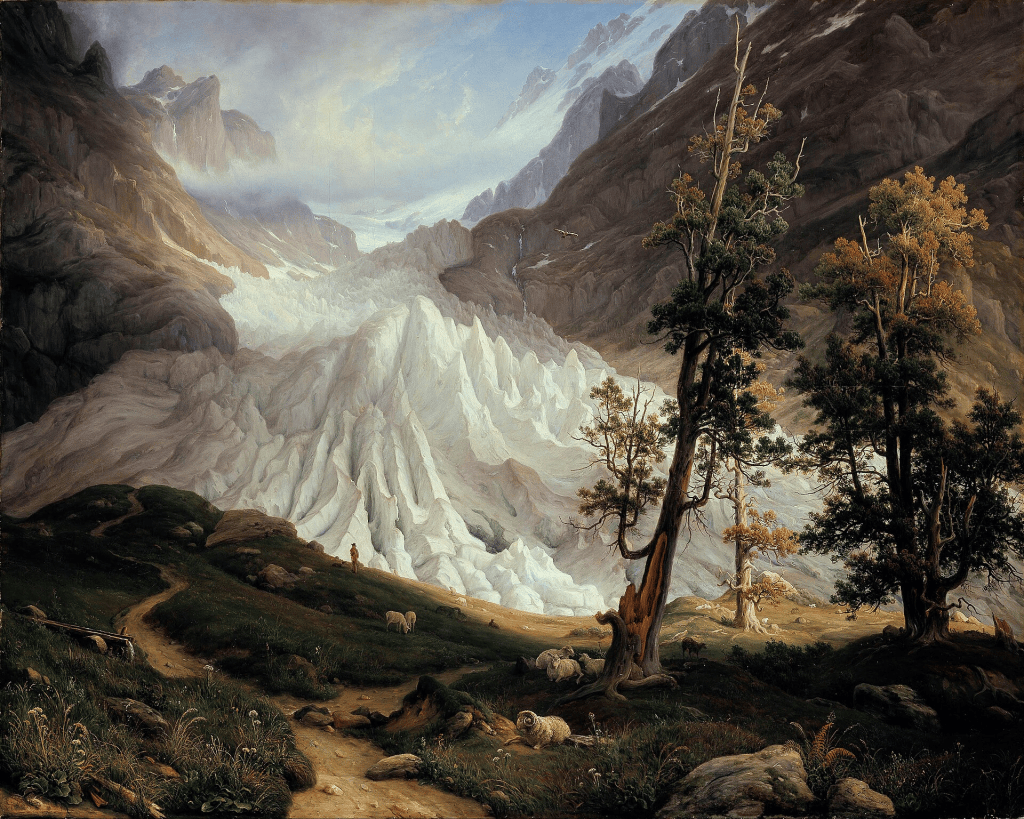
Thomas Fearnley (1802–1842), Norwegian
He traveled constantly across Europe and crossed the Alps on foot in 1832. His masterpiece is The Grindelwald Glacier (1838). It is based on studies made on site in 1835, but Fearnley made the final composition very dramatic.
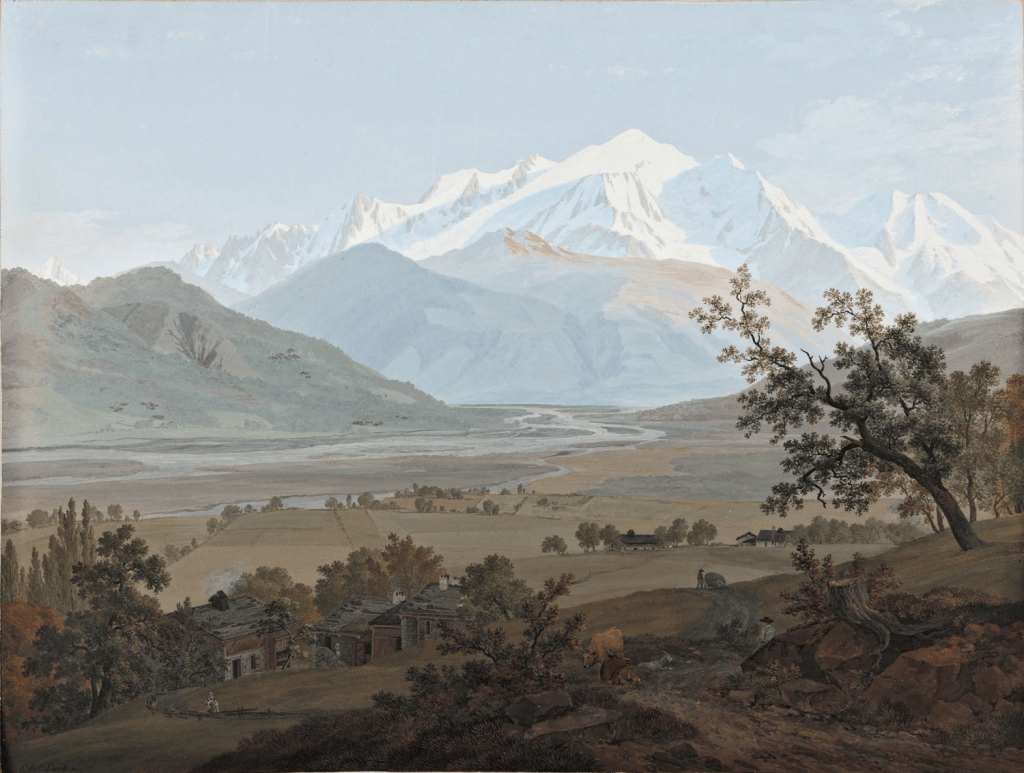
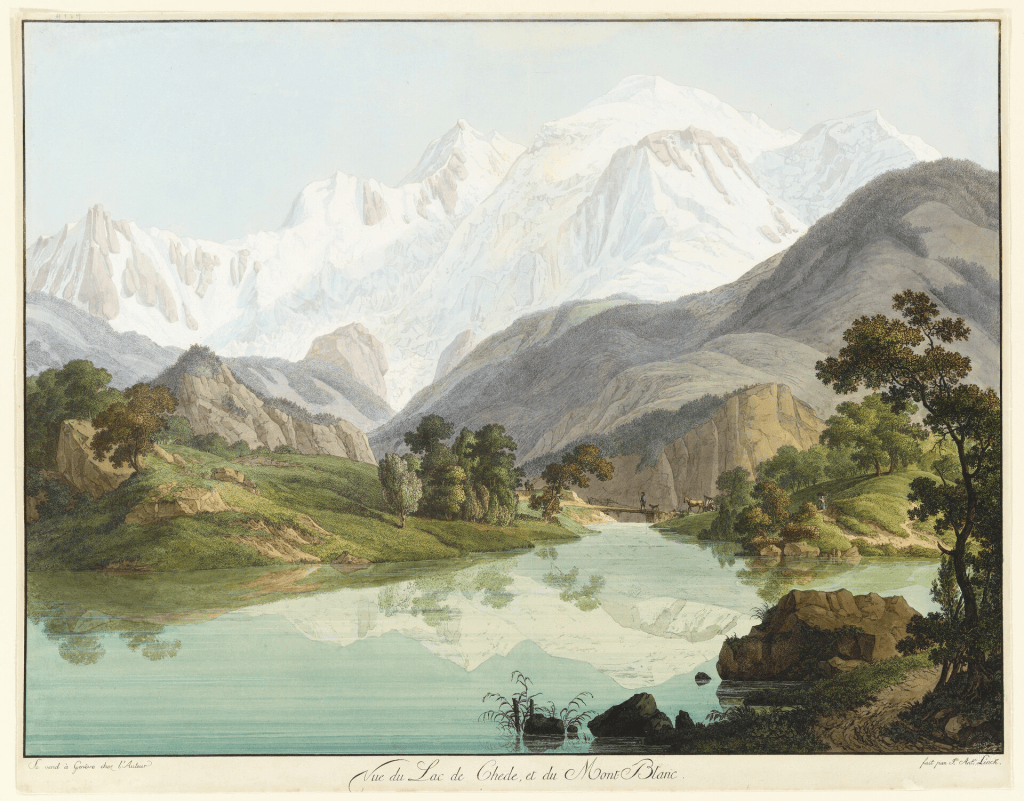
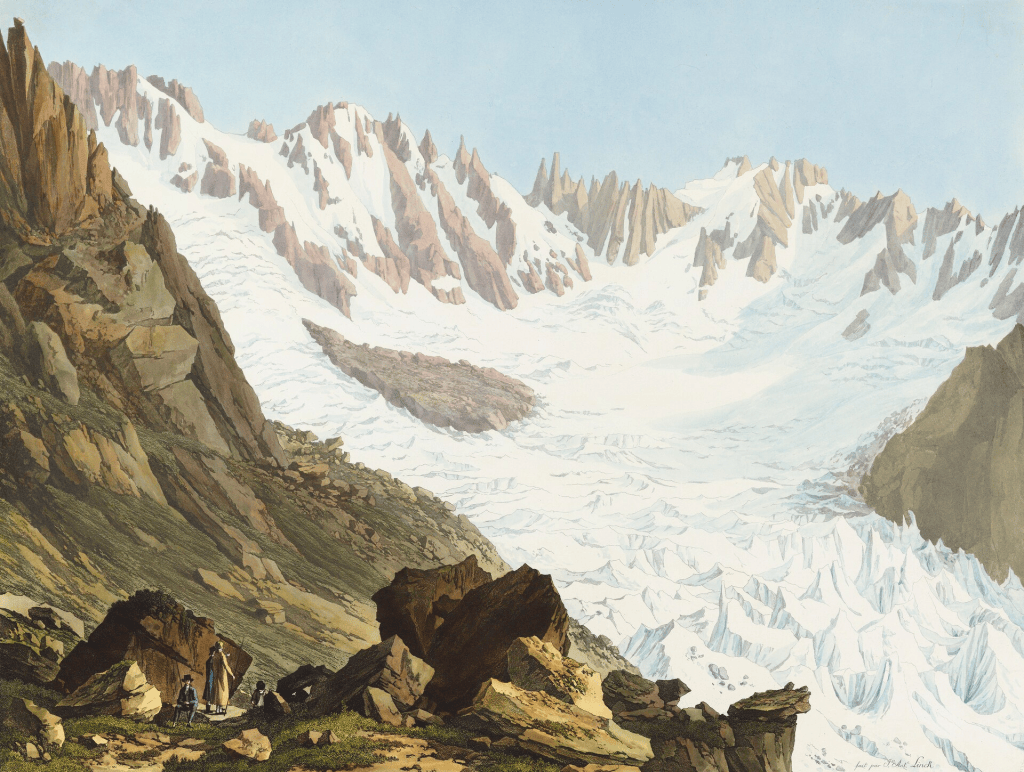
Jean-Antoine Linck (1766–1843), Geneva
He repeatedly went into the Mont Blanc region and produced remarkably exact views of glaciers, the Grandes Jorasses and Chamonix. His glacier images of roughly 1790–1820 are now important to historians of glaciology. He effortlessly mixes topographical precision with picturesque beauty, showing the way of the future of Alpine Art.
Franz Steinfeld (1787–1868), Austrian
Important in Austria and little known elsewhere. He helped establish direct observation of the Salzkammergut Alps as subject. His mountains are topologically exact.