Jonathan the Giant
Jonathan the Giant was born in the Indian Ocean around 1832 and brought to the island of Santa Elena at the tender age of 50. As of 2026 Jonathan is still alive, making him around 194 years of age.
Jonathan was a Seychelles giant Tortoise (Aldabrachelys gigantea hololissa), a subspecies of the Aldabra Giant Tortoise (Aldabrachelys gigantea)
The longest-lived turtle before Jonathan was Tu’I Malila from Tonga who died at the age of 189 in 1966. This female Radiated Tortoise (Astrochelys radiata) from Madagascar was given by Captain Cook to the King of Tonga.
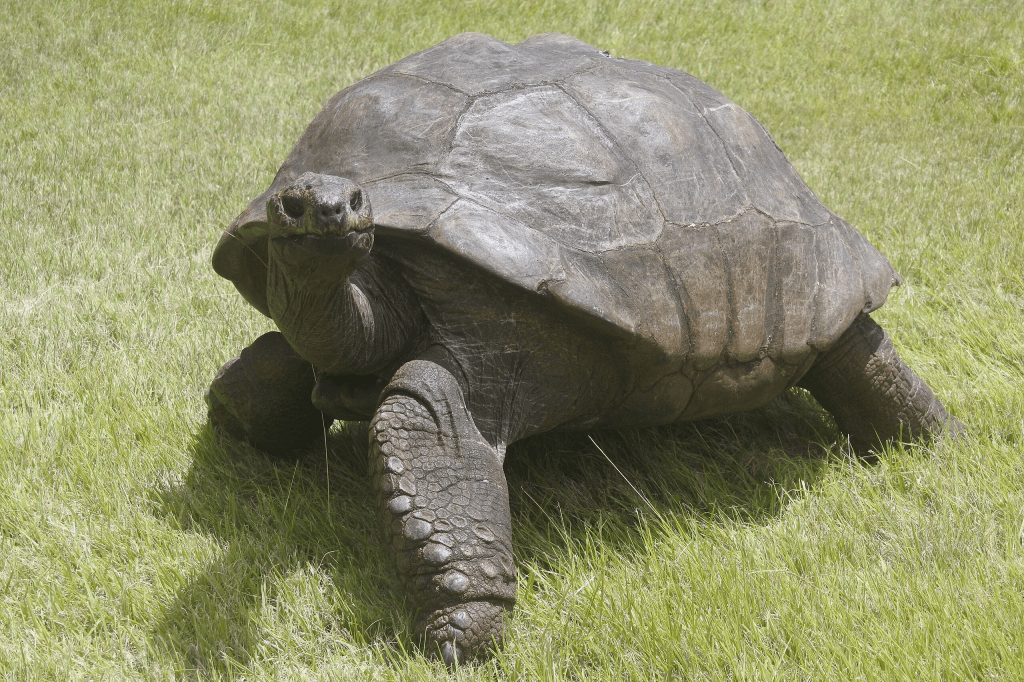
By Luke McKernan – Jonathan, CC BY-SA 2.0, ommons.wikimedia.org/w/index.php?curid=108220564
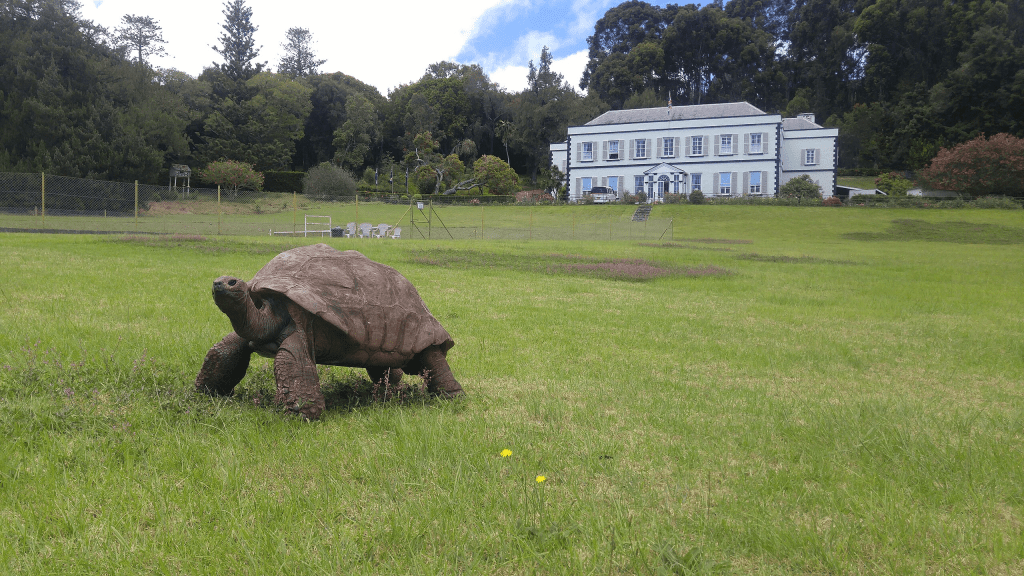
By Kevstan – Own work, CC BY-SA 4.0, /commons.wikimedia.org/w/index.php?curid=91383042
Lonesome George
Lonesome George (Spanish: Solitario George or Jorge, c. 1910-2012) was a male Pinta Island Tortoise (Chelonoidis niger abingdonii) and the last known individual of the subspecies. In his last years, he was known as the rarest creature in the world.
Lonesome George was found in 1971 on Pinta, one of the Galapagos Islands. The natural vegetation of Pinta Island had disappeared due to invasive animals. No other Pinta Island Tortoise was ever found.
George was brought to Santa Cruz Island where many attempts were made at breeding him with other members of his species, though of a different subspecies than him and therefore not a perfect genetic match. All these attempts failed. Lonesome George died in 2012 at the age of 101.
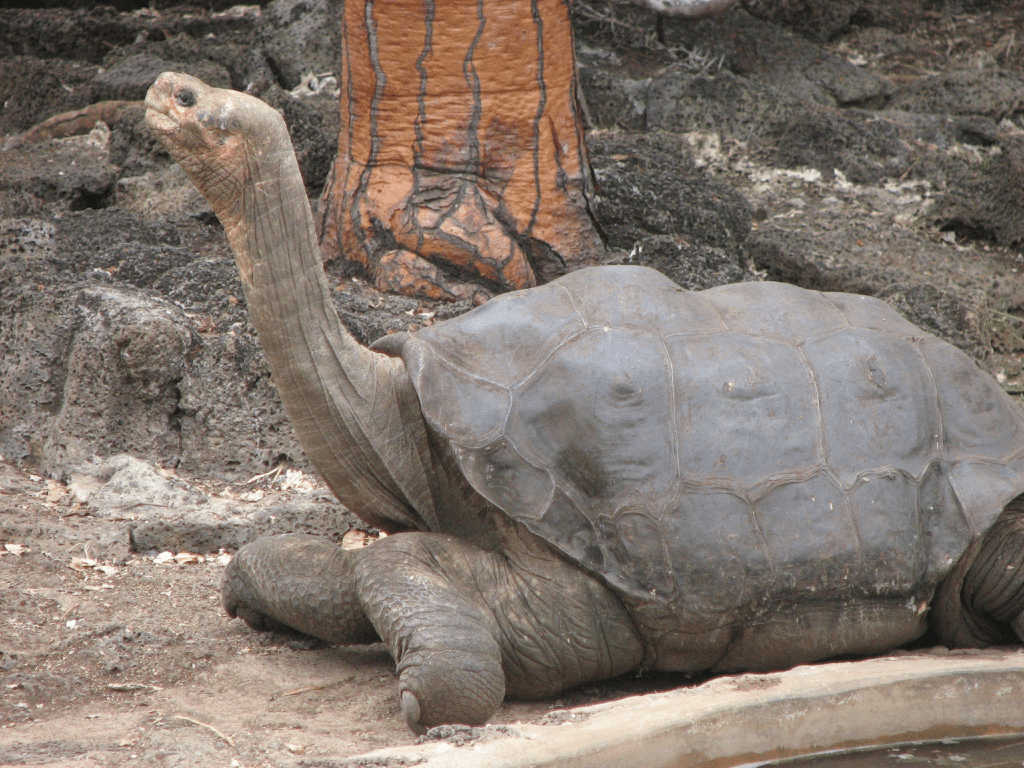
By Mike Weston – Flickr: Lonesome George 2, CC BY 2.0, //commons.wikimedia.org/w/index.php?curid=20035146
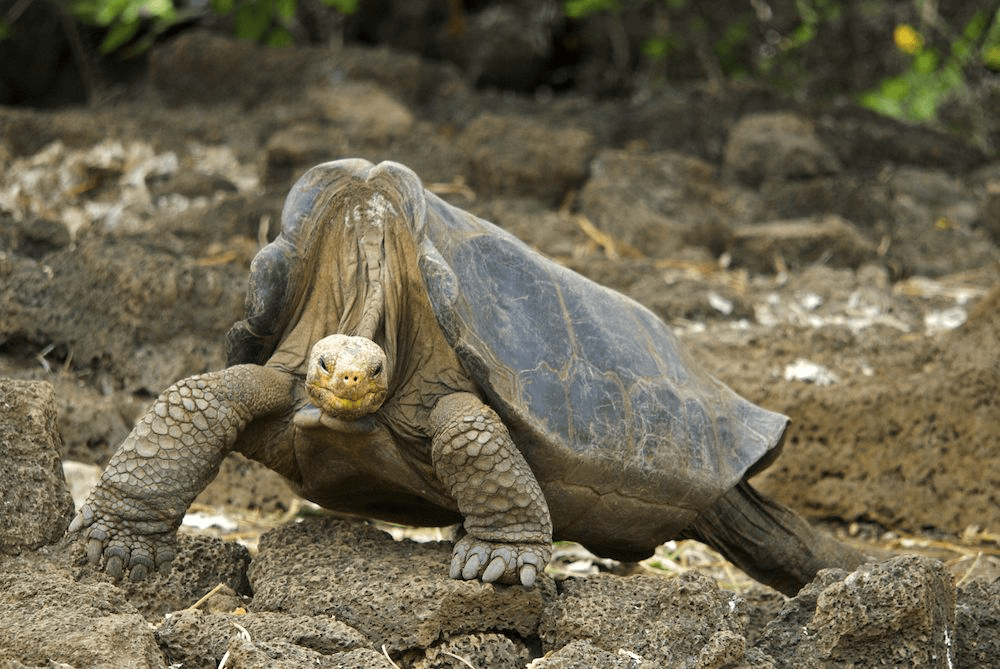
By Arturo de Frias Marques – Own work, CC BY-SA 3.0, /commons.wikimedia.org/w/index.php?curid=29385064
Harry/Harriet
Harriet (formerly Harry; c. 1830 – 23 June 2006) was a Galápagos Tortoise (Chelonoidis niger) specifically a Western Santa Cruz Tortoise (C. n. porteri) who had an estimated age of 175 years at the time of her death in Brisbane, Australia. Harriet is one of the longest-lived known tortoises, behind Tu’i Malila, who died in 1966 at the age of 188 or 189; and Jonathan the Giant, who remains alive at an age of 193.
Harriet was thought a male and was called Harry until the 1960s. It is very difficult to tell the sex of adult giant turtles and this mistake was apparently made by zoos all over the world.
Harriet was reportedly collected by Charles Darwin during his 1835 visit to the Galápagos Islands and was known as the Darwin Turtle. Much doubt surrounds this story.
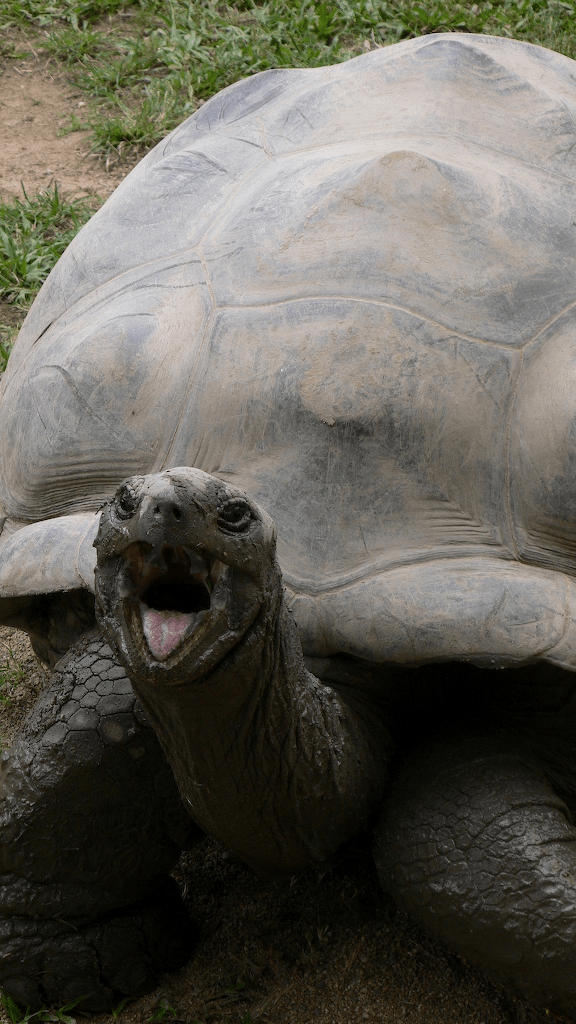
CC BY-SA 2.0, commons.wikimedia.org/w/index.php?curid=893324
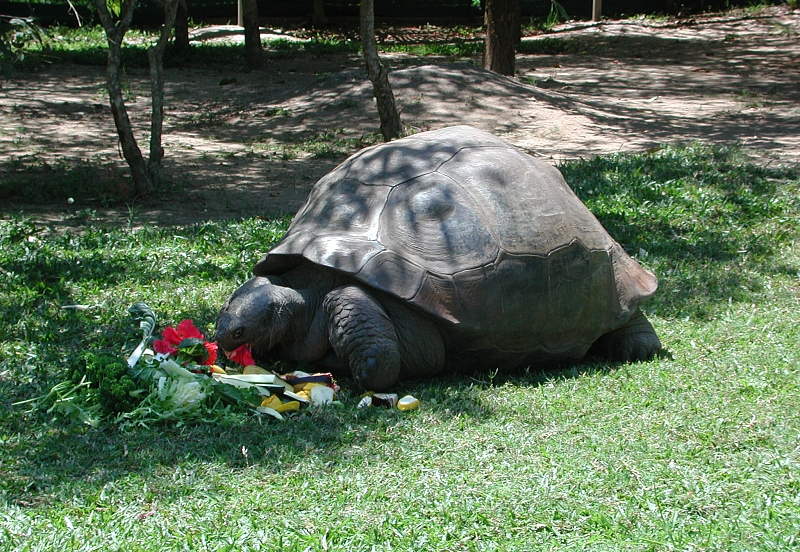
By Fritz Geller-Grimm – Own work, CC BY-SA 2.5, commons.wikimedia.org/w/index.php?curid=453302
Mzee
Mzee, an Aldabra Giant Tortoise, was living a quiet tortoise life in the Haller Park Rescue Centre in Bamburi, Kenya. That all changed when Owen, a juvenile hippopotamus refugee from the 2004 tsunami, arrived at the rescue center. Owen was anxious and lonely and found solace by coddling against the only thing that vaguely resembled a hippo: Mzee.
Mzee was initially bothered about Owen but grew to like him. Owen lives his adult life with a herd of hippos.
Mzee is Swahili for a wise old man.
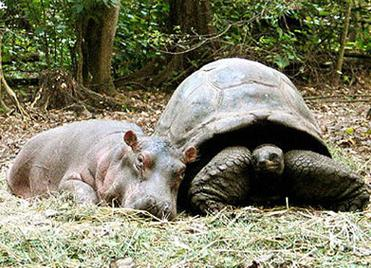
Cụ Rùa
Stories about the mysterious creatures in Hoàn Kiếm Lake (The Lake of the Returned Sword) in Hanoi, Vietnam have been circulating for 500 years, starting with the legend of King Le Loi and the giant turtle of Hoan Kiem (see below).
The lake itself is both small and shallow, measuring 200 metres wide, 600 metres long, and only two meters deep. It is also badly polluted. The turtle was considered a cryptid and a local legend.
Near the northern shore of Hoàn Kiếm Lake lies Jade Island, on which the Temple of the Jade Mountain is located.

By Cyril Doussin from London, United Kingdom – IMG_3020.JPG, CC BY-SA 2.0, commons.wikimedia.org/w/index.php?curid=112811349
But in 1967, a fisherman caught and killed a huge turtle (200 kg (440 lb) and 1.9 m) that was preserved and placed on display in the Temple of the Jade Mountain. The search for the Hoàn Kiếm Turtles was on.
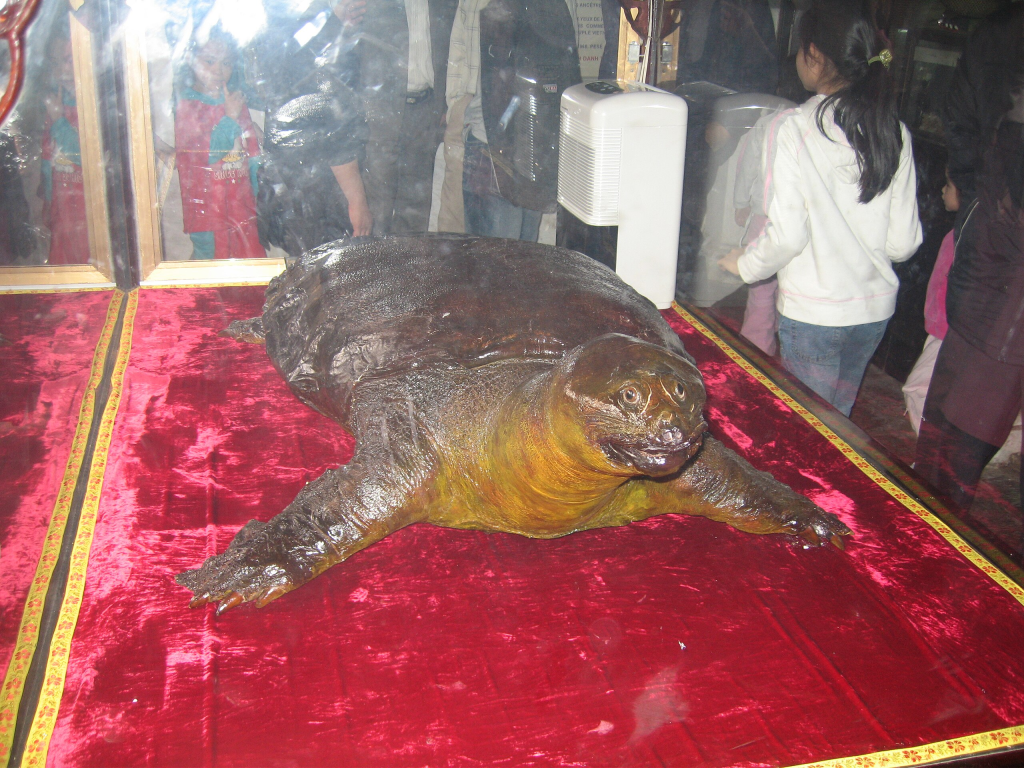
By Casablanca1911 at Vietnamese Wikipedia
They appear to be very similar to the Yangtze Giant Softshell Turtle (Rafetus swinhoei), also very rare. Only four members of the species are believed to be left in the world. One lives in Dong Mo Lake in the west of Hanoi, while two others are being raised in captivity in China. But the Hoàn Kiếm Turtle could be its own species: Rafetus leloii.
Finally, in 1998, an amateur naturalist made a video of a turtle in the Lake. The animal, believed to be more than a 100- years-old, was seen again and named “Cụ Rùa“, meaning “great grandfather turtle” in Vietnamese.
Cụ Rùa died in 2016
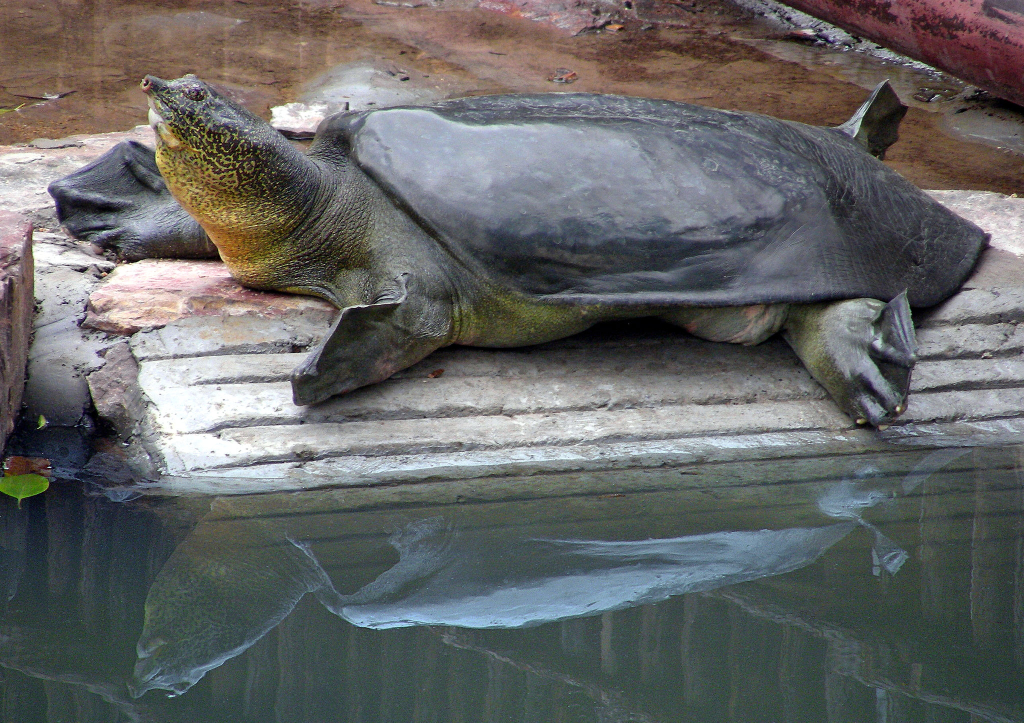
An Attempt to catch Cu Rua fails in Thanh Nien Weekly:
One attempt to capture the ailing turtle in Hanoi’s Hoan Kiem Lake has failed.
“I would not call it a failure because it may take several tries. It’s hard to catch a large, very large soft-shell turtle,” said Douglas Hendrie, technical advisor of Education for Nature – Vietnam (ENV), a non-governmental conservation organization in Vietnam”
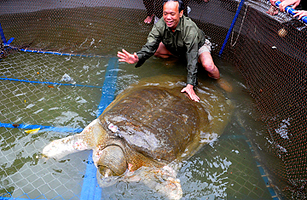
Na Son Nguyen / AP
The legend:
In the fifteenth century, King Le Loi liberated Vietnam from the Chinese with his magic sword Heaven’s Will, a gift of the Golden Turtle God, Kim Quy. Later, while boating on a lake in Hanoi, a huge turtle jumped out of the water and took the sword, disappearing into depths of the lake. Lê Lợi then renamed the lake Hoàn Kiếm Lake (or Hồ Gươm), meaning “The Lake of the Returned Sword.”
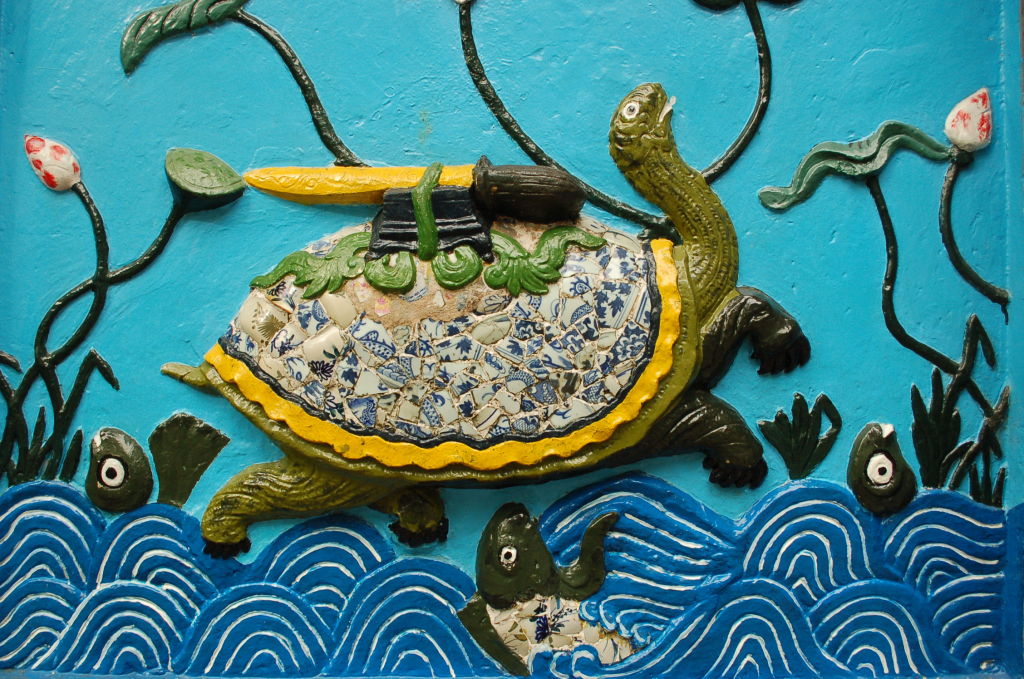
By Rdavout – Own work, CC BY-SA 3.0, commons.wikimedia.org/w/index.php?curid=680
While all tortoises are technically turtles, not all turtles are tortoises. Tortoises are land-turtles as opposed to all other turtles who prefer aquatic environment.
 THE INACTIVIST