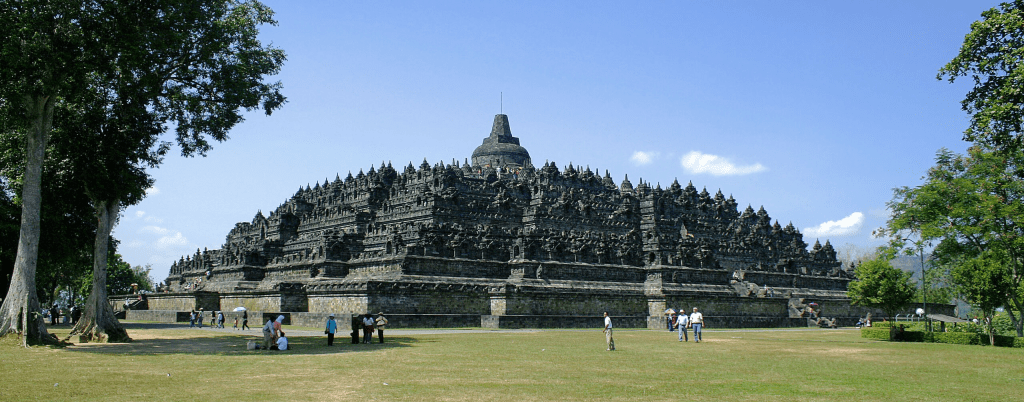
Borobudur is the largest Buddhist temple in the world and is located in the largest Muslim country in the world, Indonesia.

By Gunawan Kartapranata – Own work, CC BY-SA 3.0,
Borobudur (Indonesian: Candi Borobudur, Javanese: ꦕꦤ꧀ꦝꦶꦧꦫꦧꦸꦝꦸꦂ) is a 9th-century Buddhist temple near the city of Magelang in Java, Indonesia. Gunadharma was the architect.
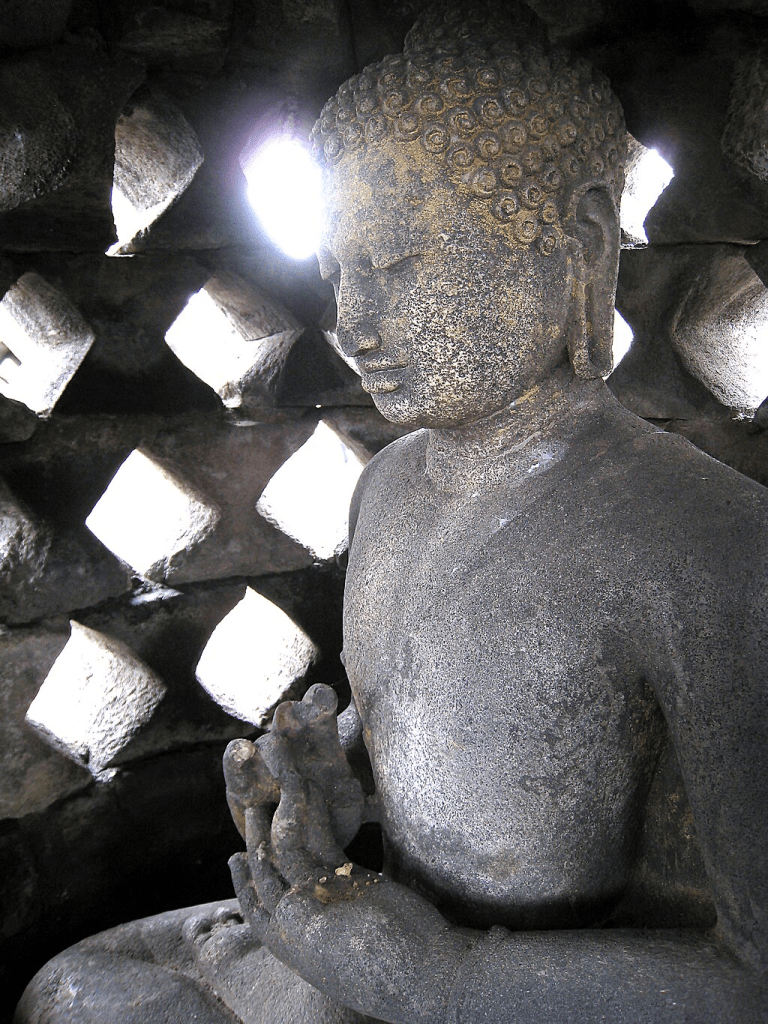
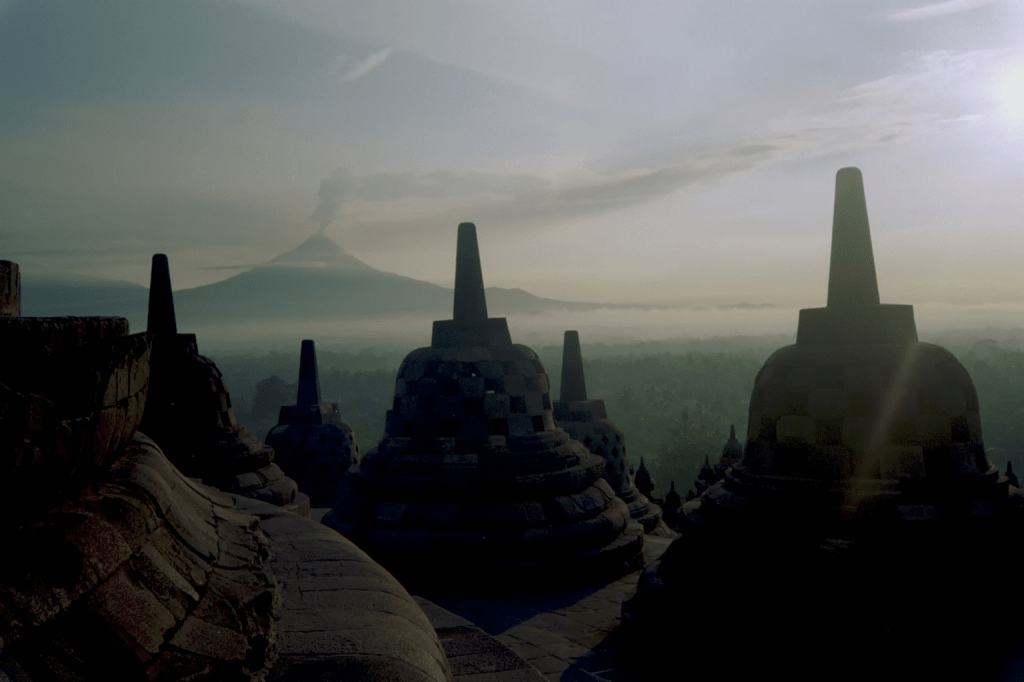
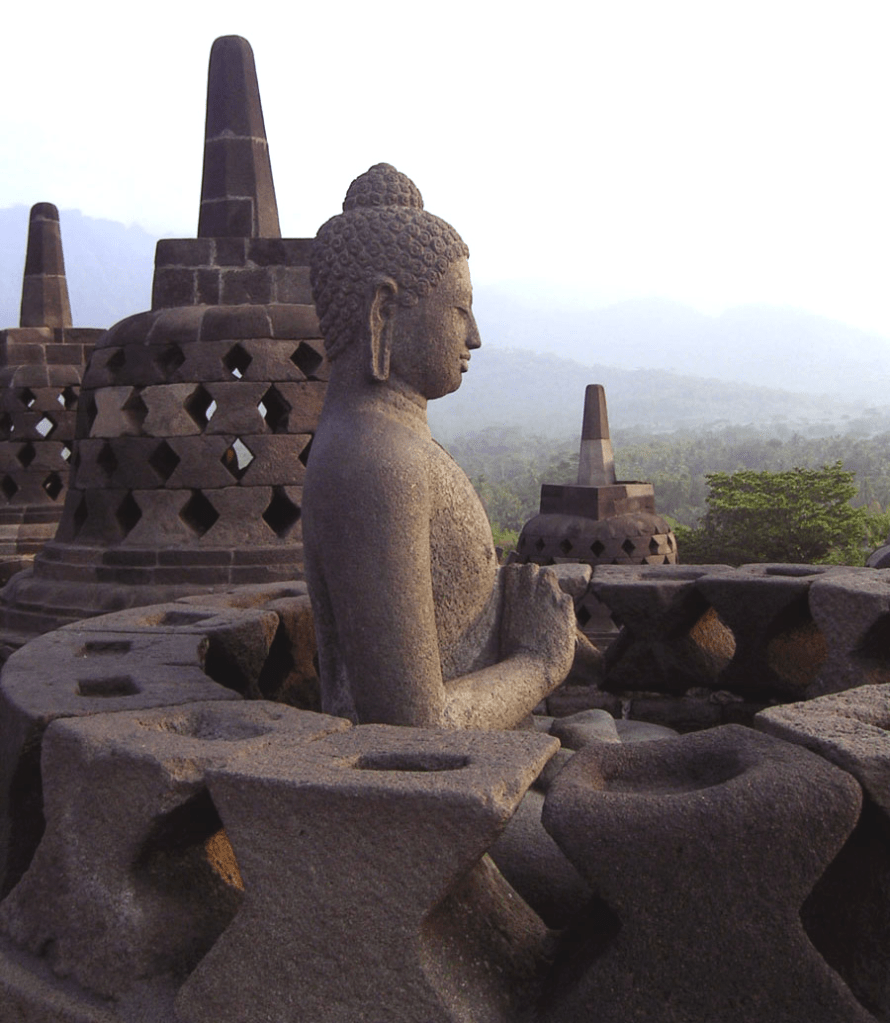
The temple consists of nine platforms on top of each other, contains 2,670 bas reliefs and 500 Buddha statues. The central dome on top is surrounded by 72 Buddha statues, each seated inside a perforated stupa.
By Gunawan Kartapranata – Own work, CC BY-SA 3.0,/commons.wikimedia.org/w/index.php?curid=11106032
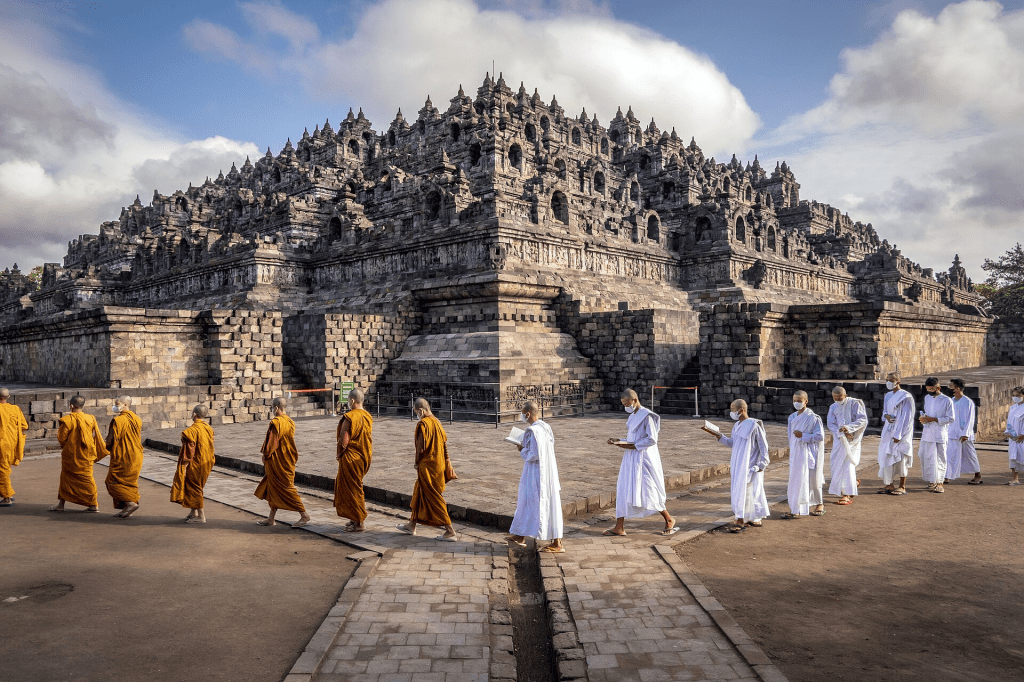
Borobudur is still popular as a pilgrimage site, with Indonesian Buddhists celebrating Vesak Day (Buddha Day) at the monument.
By Heri nugroho – Own work, CC BY-SA 4.0,commons.wikimedia.org/w/index.php?curid=130548074
When viewed from above, Borobudur takes the form of a giant Buddhist mandala,


By Gunawan Kartapranata – Own work using:The Restoration of Borobudur, p. 30 & 37, CC BY-SA 3.0, commons.wikimedia.org/w/index.php?curid=8763651
According to the Borobudur Site:
“Kamadhatu:
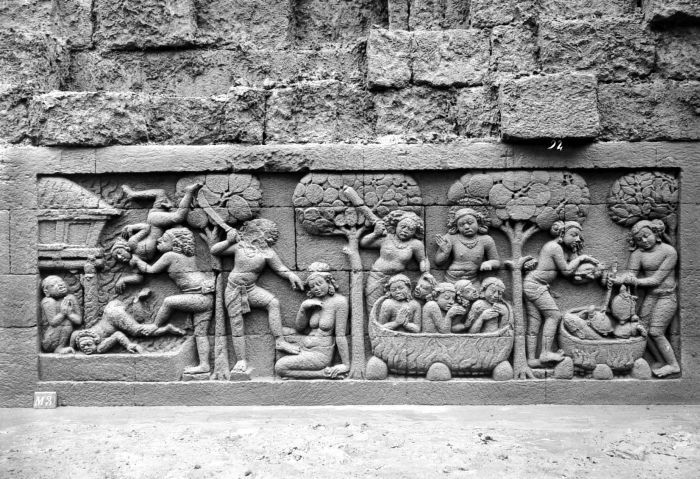
The visible and present world experienced by humans today. Kamadhatu consists of 160 reliefs illustrating the Karmawibhangga Sutra
Rupadhatu:
The transitional realm, where humans are freed from worldly matters. Rupadhatu consists of galleries with stone relief carvings and Buddha statues. In total, there are 328 Buddha statues,
Arupadhatu:
The highest realm, the abode of the gods.
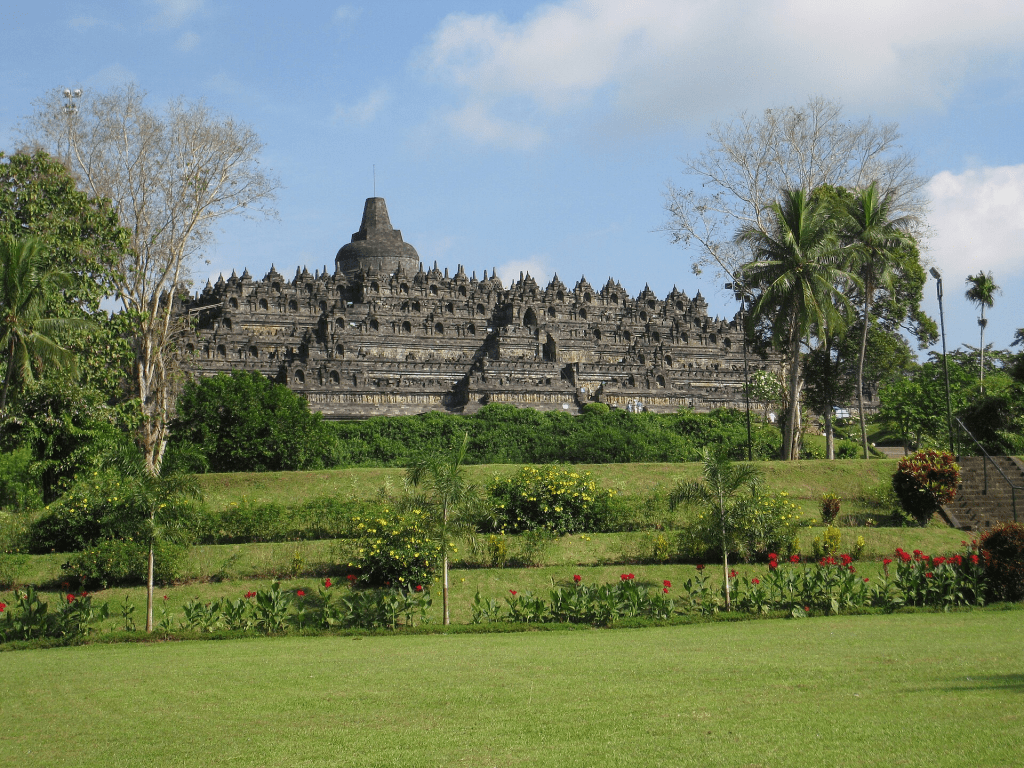
Three circular terraces lead to the central dome or stupa, symbolizing spiritual ascent. This section is devoid of ornaments or decorations, representing the ultimate purity.
These terraces consist of hollow, circular stupas resembling inverted bells, each containing a Buddha statue facing outward. There are 72 stupas in total. The largest stupa in the center, originally 42 meters high with a diameter of 9.9 meters, is not as tall as it once was. Unlike the surrounding stupas, the central stupa is empty, sparking debate over whether it once held something or was intended to be empty.“
By Anandajoti – Own work, CC BY-SA 3.0, commons.wikimedia.org/w/index.php?curid=15135261

By ctsnow – http://www.flickr.com/photos/ctsnow/94767236/, commons.wikimedia.org/w/index.


By Photo by CEphoto, Uwe Aranas or alternatively © CEphoto, Uwe Aranas, CC BY-SA 3.0,
By Nappio at the English-language Wikipedia, CC BY-SA 3.0, /commons.wikimedia.org/w/index.php?curid=14362
By Gunawan Kartapranata – Own work, CC BY-SA 3.0, commons.wikimedia.org/w/index.php?curid=8800607

By Collectie Wereldmuseum (v/h Tropenmuseum), part of the National Museum of World Cultures, CC BY-SA 3.0, /commons.wikimedia.org/w/index.php?curid=11032201
By Kassian Cephas – Wereldmuseum Amsterdam, Public Domain, commons.wikimedia.org/w/index.php?curid=8613842

By Gunawan Kartapranata – Own work, CC BY-SA 4.0, commons.wikimedia.org/w/index.php?curid=56002713
 THE INACTIVIST