Belted Galloway
A traditional Scottish cattle breed built to last, the Belted Galloway thrives in the Scottish Highlands despite the poor grazing and the savage winters where it stays outside all winter. The white belt completely encircles the body.
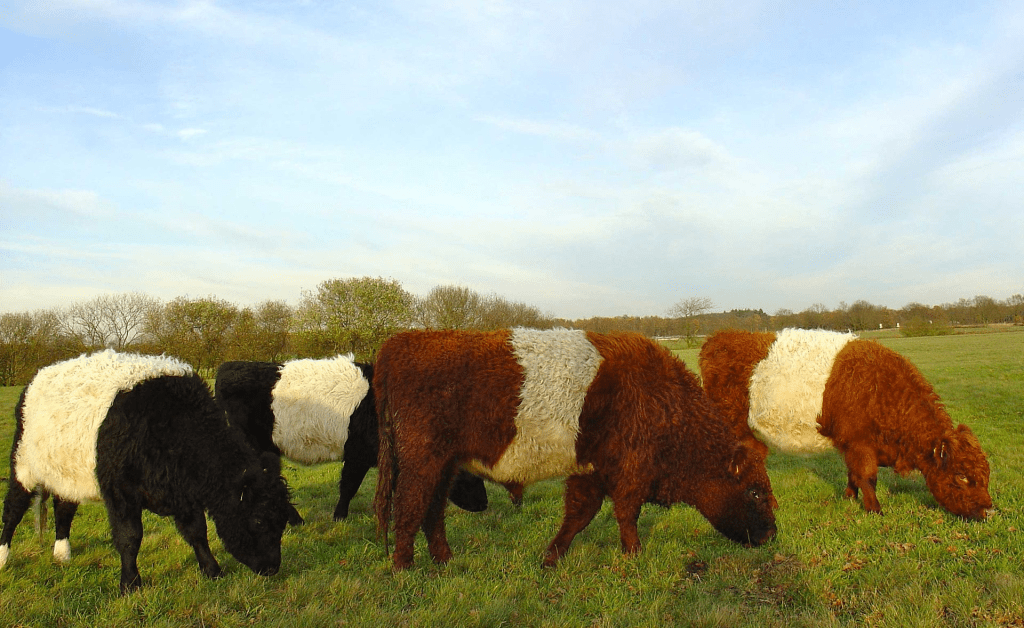
By Gouwenaar – Own work, Public Domain. ,commons.wikimedia.org/w/index.php?curid=10384782
Highland Cow
The diminutive Highland Cow has double coat of hair. On the outside is the oily outer hair—the longest of any cattle breed, covering a downy undercoat. Famously hardy.
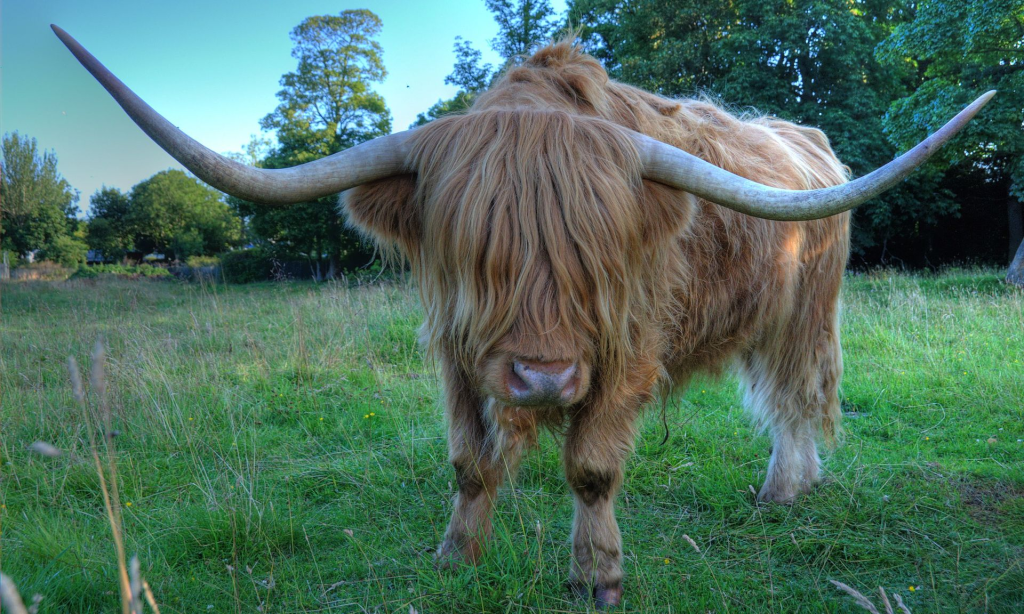
By giomodica, CC BY 3.0, https://commons.wikimedia.org/w/index.php?curid=53729031
Dandie Dinmont
The Dandie Dinmont Terrier is short, long, with a tuff on the head. Hunting dog specialized in otters, foxes and badgers. Can dig huge holes at prodigious speeds.
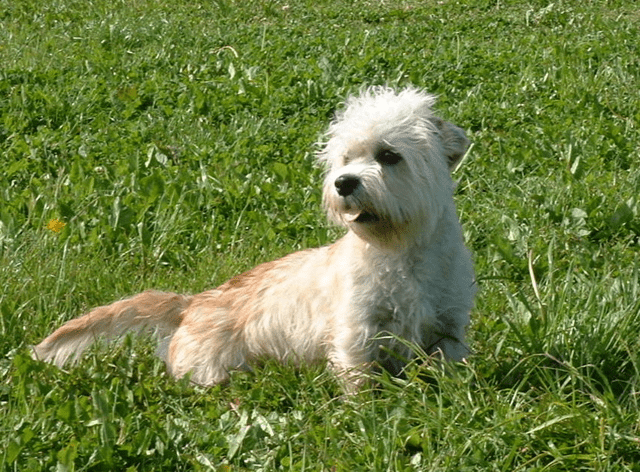
By Bonfirebuddy at Dutch Wikipedia, CC BY-SA 3.0, https://commons.wikimedia.org/w/index.php?curid=1767666
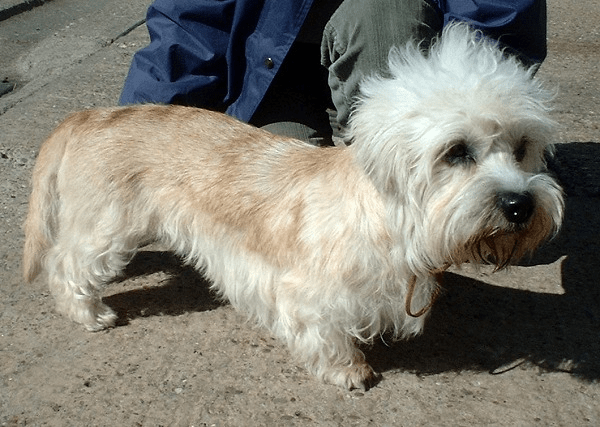
By en:User:Sannse – http://en.wikipedia.org/wiki/Image:Dandie_Dinmont_Terrier_600.jpg, CC BY-SA 3.0, htps://commons.wikimedia.org/w/index.php?curid=1324957
Eriskay Pony
Famous for his beautiful and very waterproof coat, the Eriskay Pony is only 12 and 13.2 hands (48 and 54 inches, 122 and 137 cm). The breed stayed pure over the years due to the remoteness of the Hebrides Islands.
More at the ERISKAY PONY SOCIETY
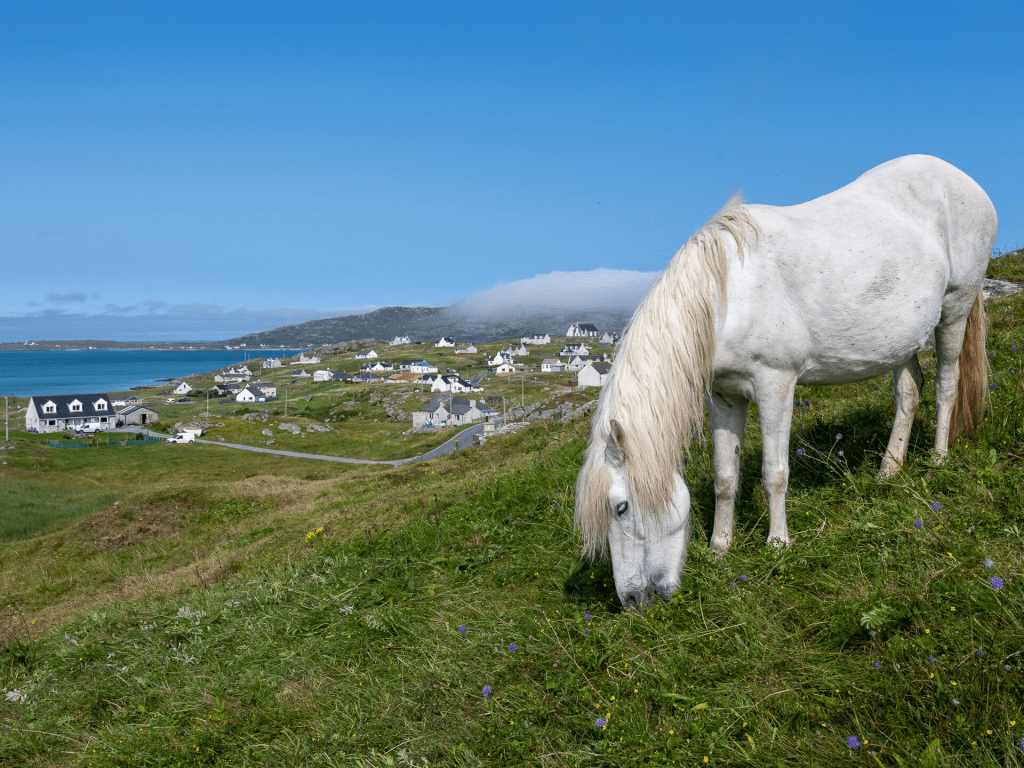
By Thomas Andy Branson – Own work, CC BY-SA 4.0, https://commons.wikimedia.org/w/index.php?curid=150924385
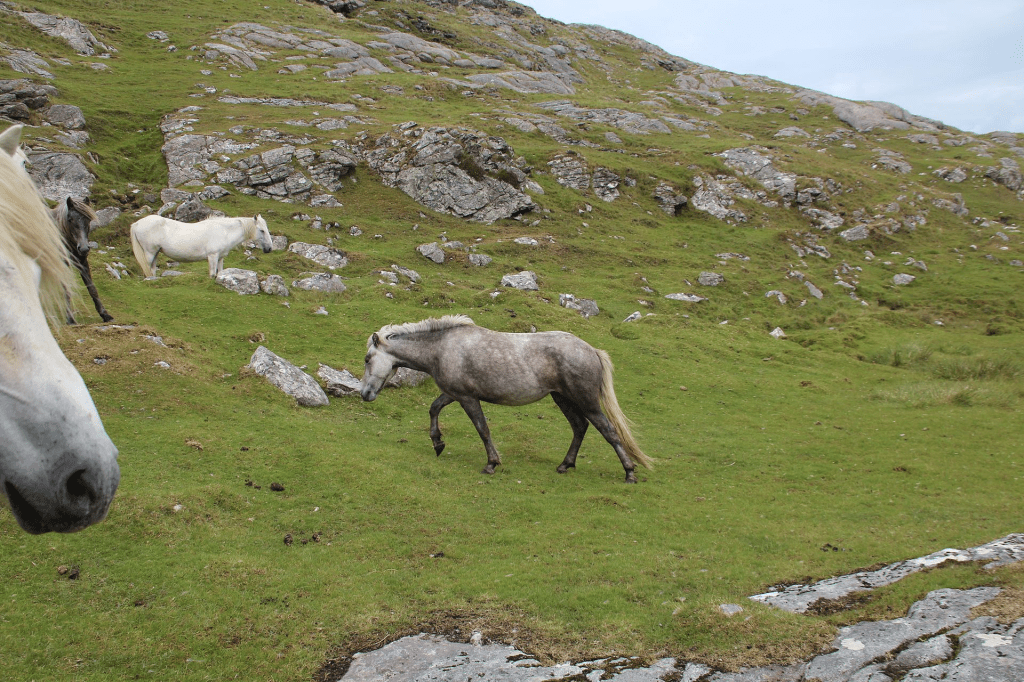
By GerritR – Own work, CC BY-SA 4.0, https://commons.wikimedia.org/w/index.php?curid=58599634
Soay Sheep
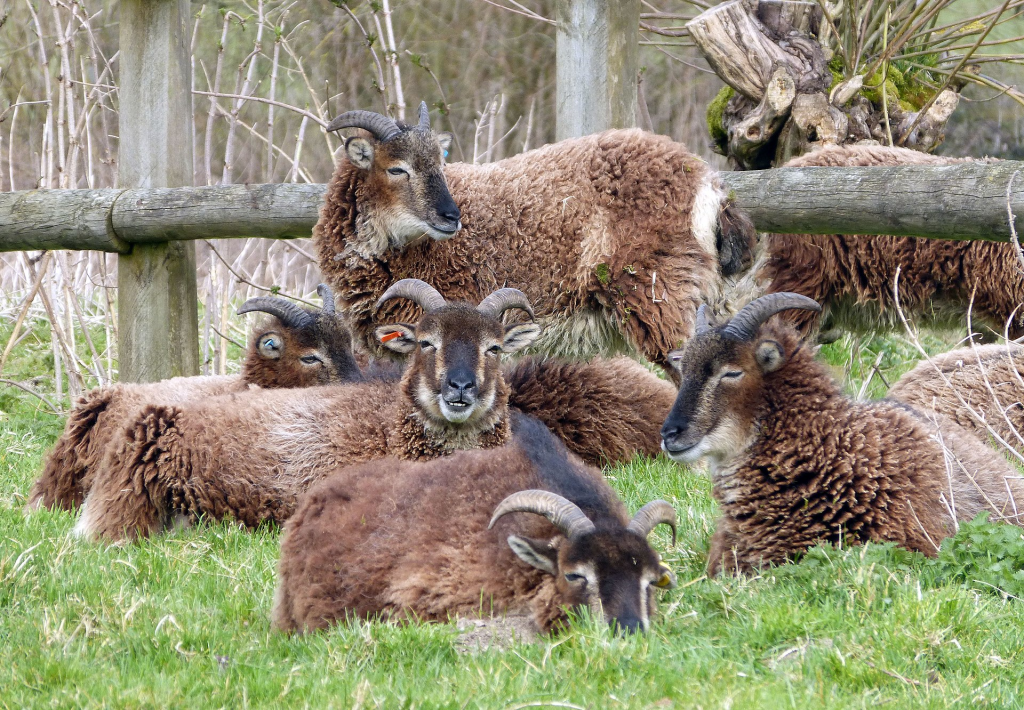
By gailhampshire from Cradley, Malvern, U.K – Soay Sheep. Ovis aries,
On the 100-hectare (250-acre) island of Soay in the St Kilda Archipelago, a population of sheep remains similar to the wild ancestors of domestic sheep (like the Mouflon or the Urial). They are descended from the animals of the first wave of pastoral people in the British Isles, 6000 years ago. They are small. agile and hardy enough to thrive without human help.
Here is the Sheep St Kilda-Soay organisation.
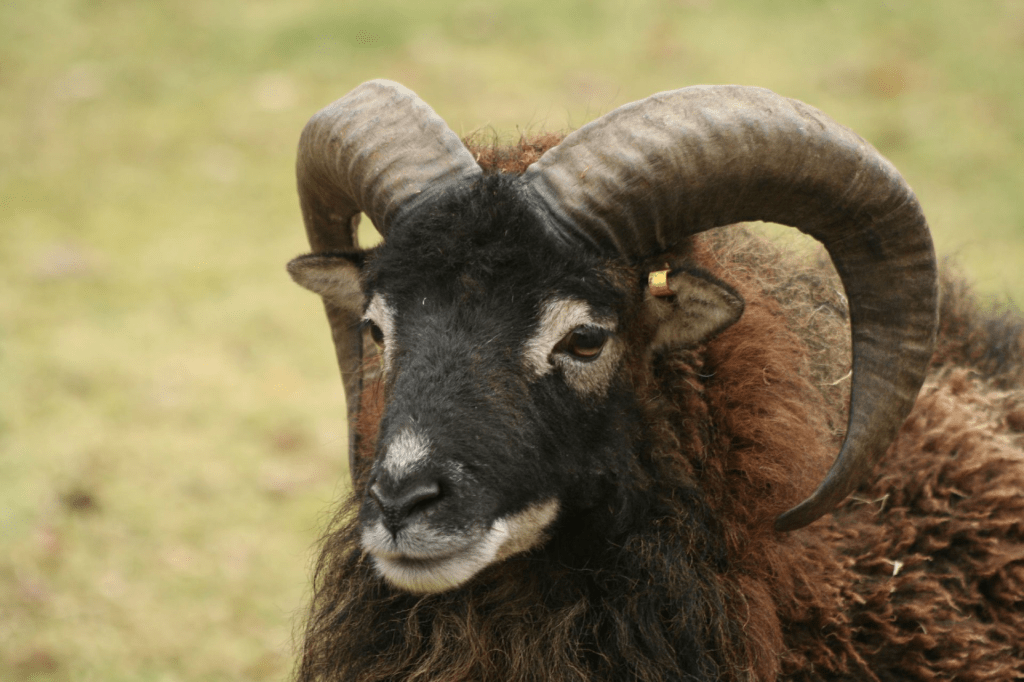
CC BY 2.0, https://commons.wikimedia.org/w/index.php?curid=658659
Hebridean Sheep
Another St Kilda breed, the Hebridean is descended from the Scottish Dunface, and survived as an ornamental sheep in a few English parks after it disappeared from the island. They can have two horns but often have four or none.
Learn more at the Hebridean Sheep Society
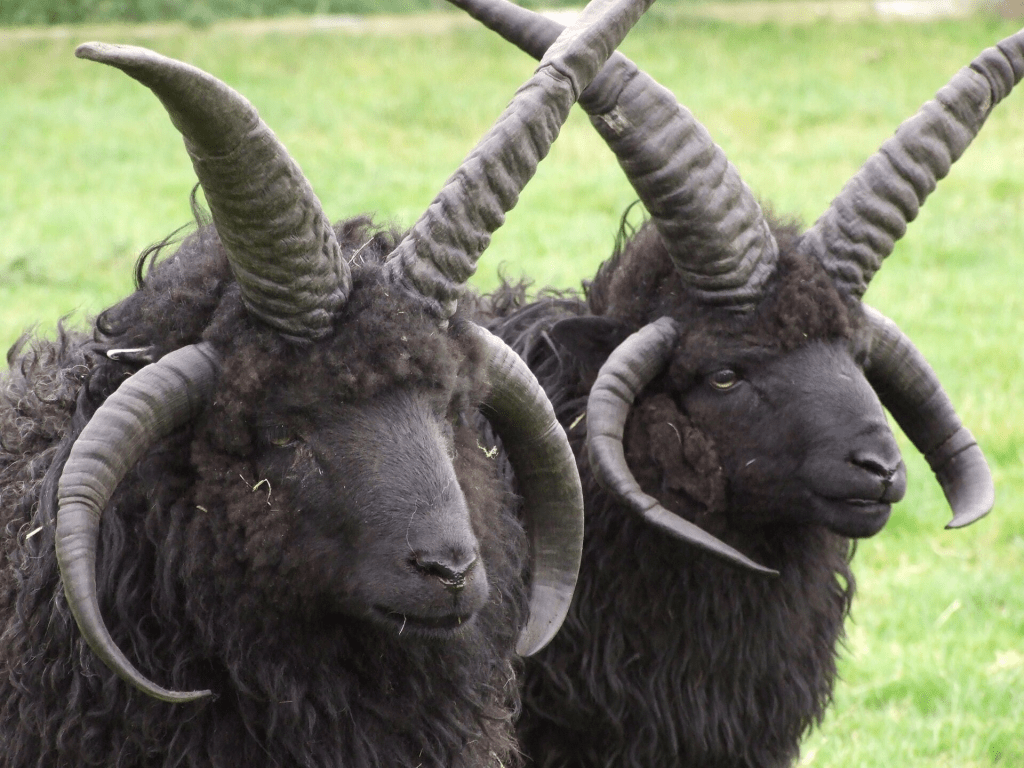
By Cathy Cassie – Hebridean, CC BY-SA 4.0, https://commons.wikimedia.org/w/index.php?curid=77837747
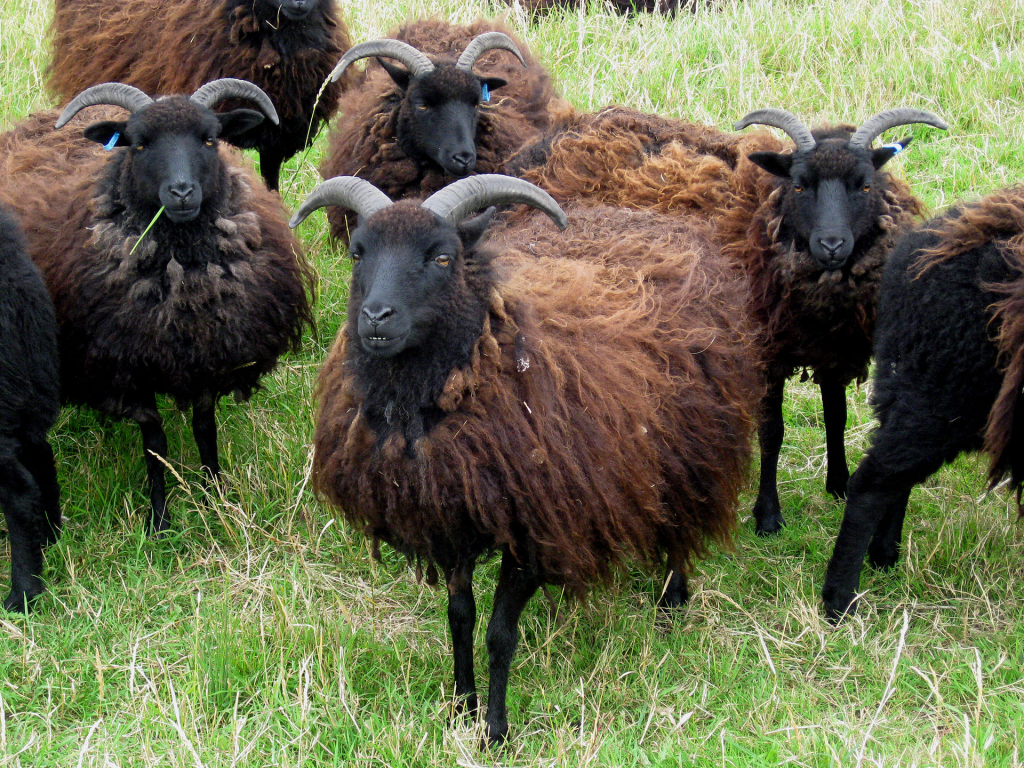
By David Wright – Hebridean Sheep, CC BY 2.0, https://commons.wikimedia.org/w/index.php?curid=7572551
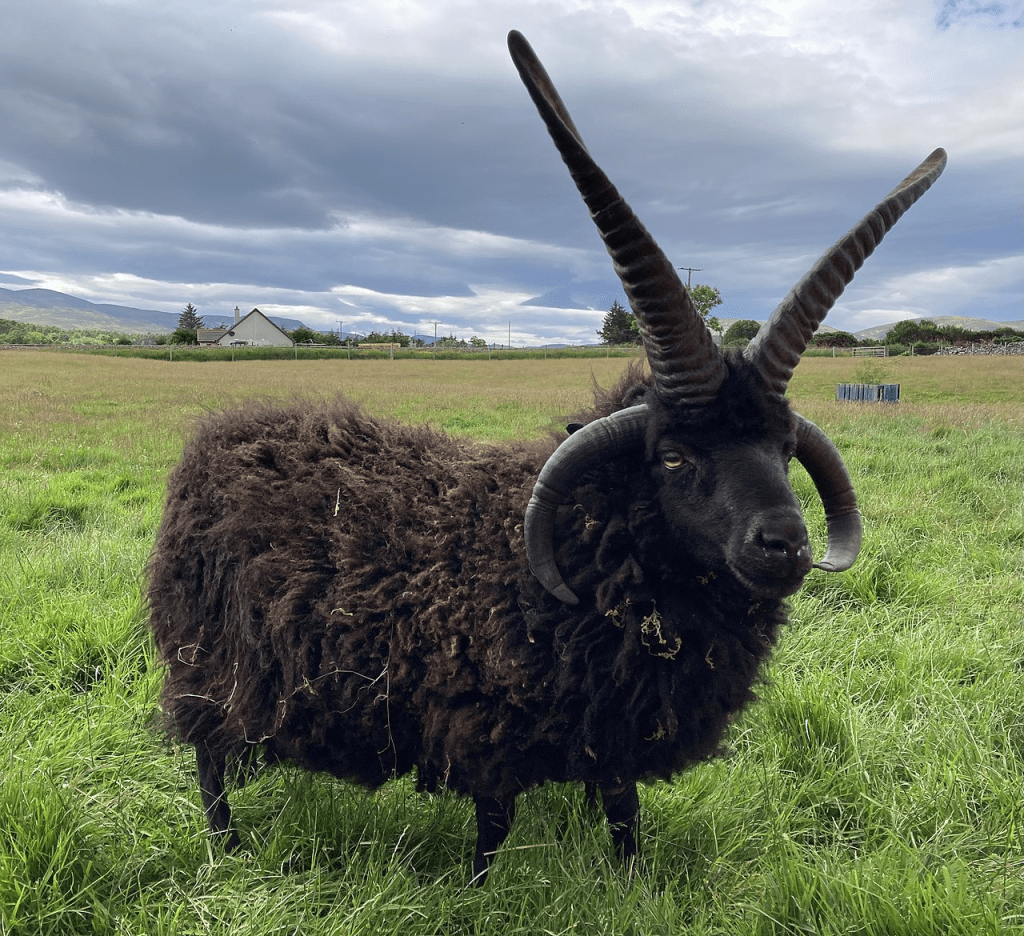
By TMallinson – Own work, CC BY-SA 4.0, ttps://commons.wikimedia.org/w/index.php?curid=125301376
North Ronaldsay
In North Ronaldsay, Orkney Islands, sheep eat seaweed as greedily as Galapagos Marine Iguanas. Their diet evolved after a 1.8m (6ft) dry stone wall was built around the island to keep the sheep on the beaches after the islanders switch from pastoralism to agriculture in the early XIX th century. (Note: The locals say the sheep ate seaweed before that). They are not as healthy as grass-eating sheep, but the Ronaldsay gets sick if switched to a exclusive grass diet.
They are descended from the sheep of Bell Beaker people who arrived in the British Isles around 4500 years ago.
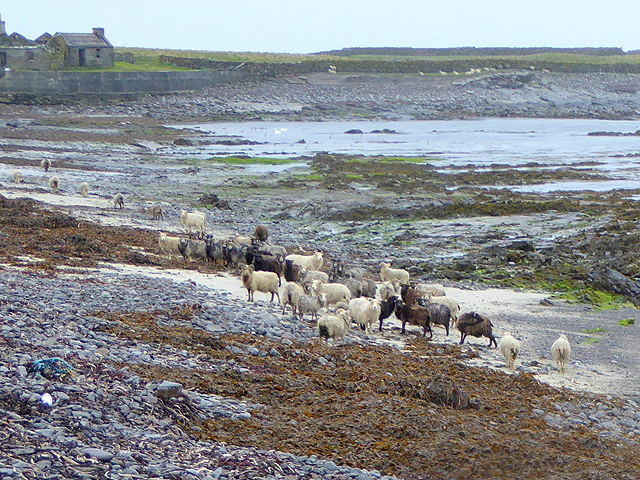
by Oliver Dixon, CC BY-SA 2.0, https://commons.wikimedia.org/w/index.php?curid=129637172
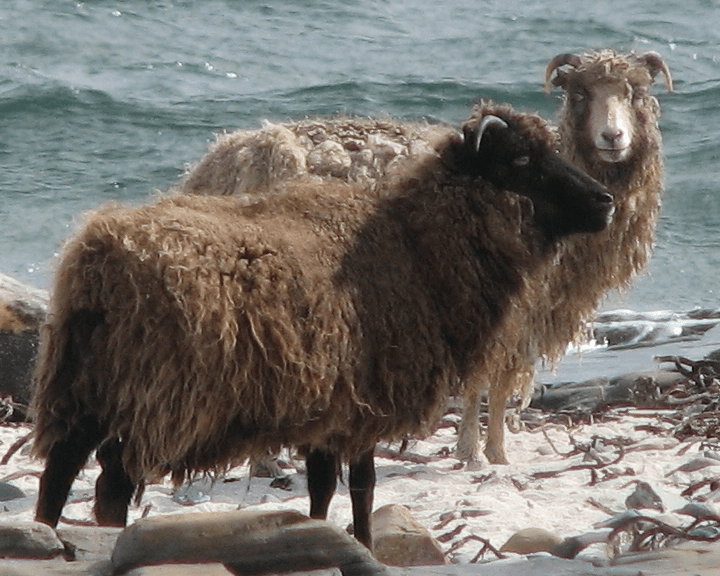
By Ian Caldwell – This file has been extracted from another file, CC BY 2.5, https://commons.wikimedia.org/w/index.php?curid=66642667
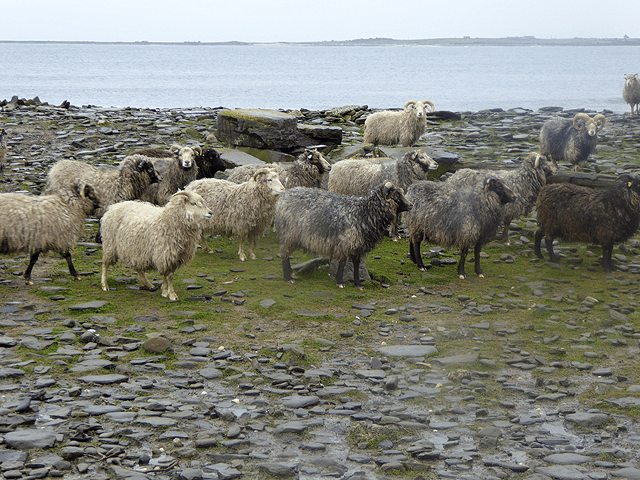
By North Ronaldsay sheep on the shores of Linklet Bay by Oliver Dixon, CC BY-SA 2.0, https://commons.wikimedia.org/w/index.php?curid=129637310
Nice views of sheep on the island:
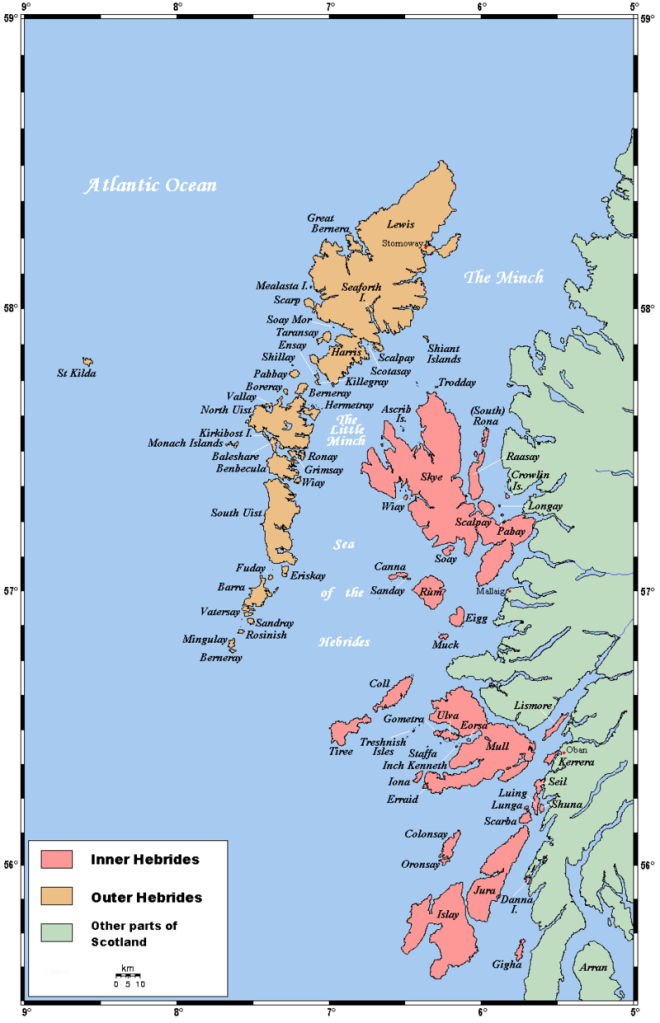
By Kelisi, CC BY-SA 3.0, https://commons.wikimedia.org/w/index.php?curid=541156
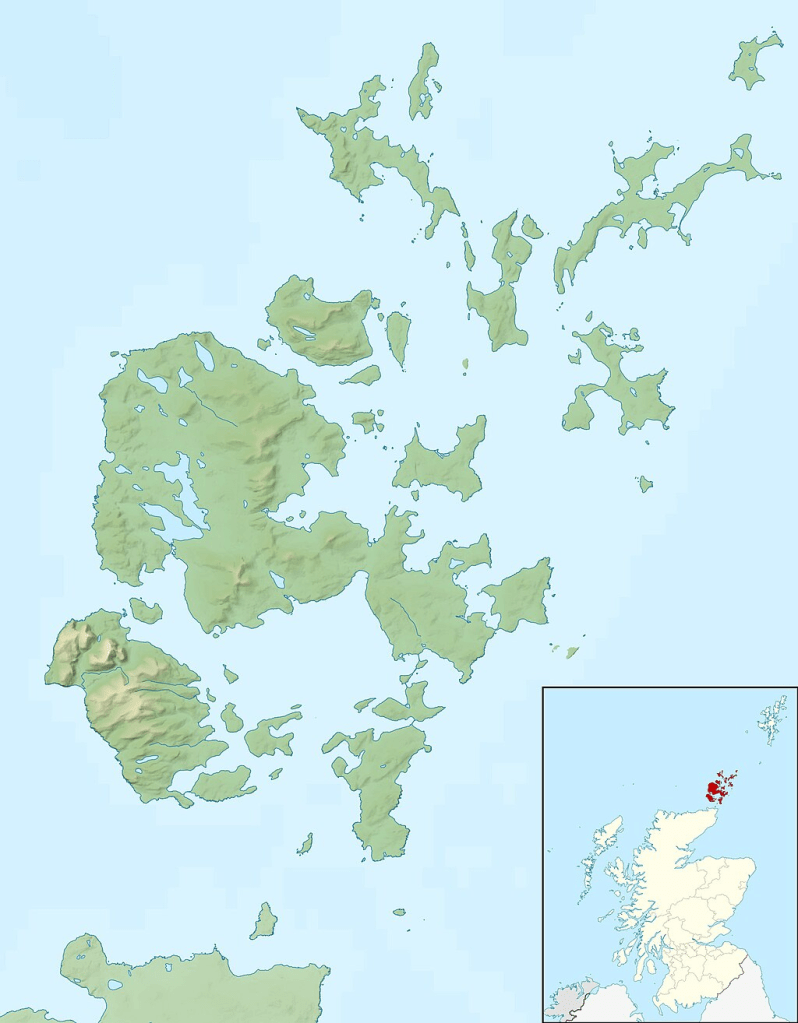
By Contains Ordnance Survey data © Crown copyright and database right, CC BY-SA 3.0,
 THE INACTIVIST
