It wasn’t long ago that folks would bus it to Kabul from Europe or to Panama from Nashville. Starting in the 70s, Tony and Maureen Wheeler and their Lonely Planet travel guides popularized traveling to exotic locations on the cheap by using local accommodations and public transportation. They wrote Across Asia on the Cheap: A Complete Guide to Making the Overland Trip in 1975 and since then, Lonely Planet has become what modern travelling is.
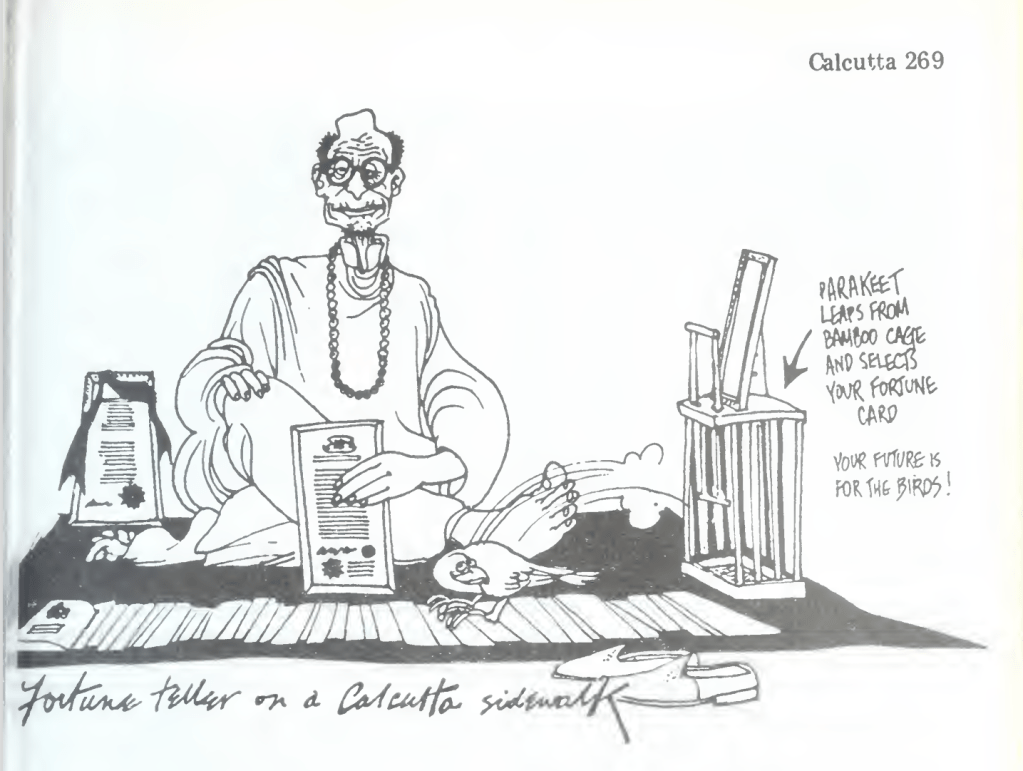
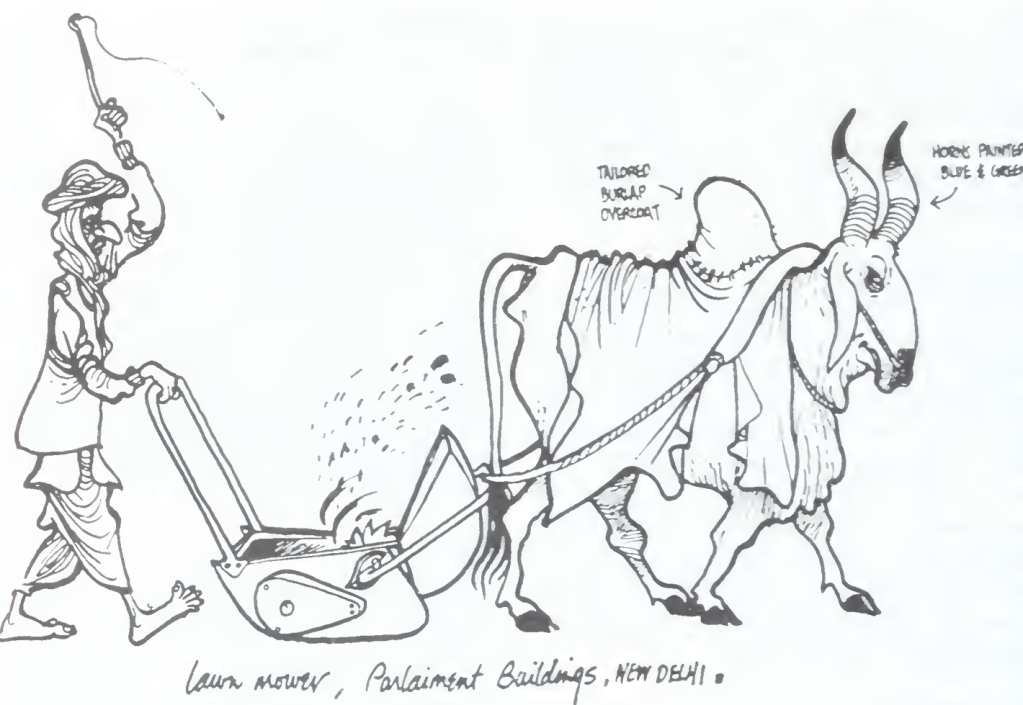
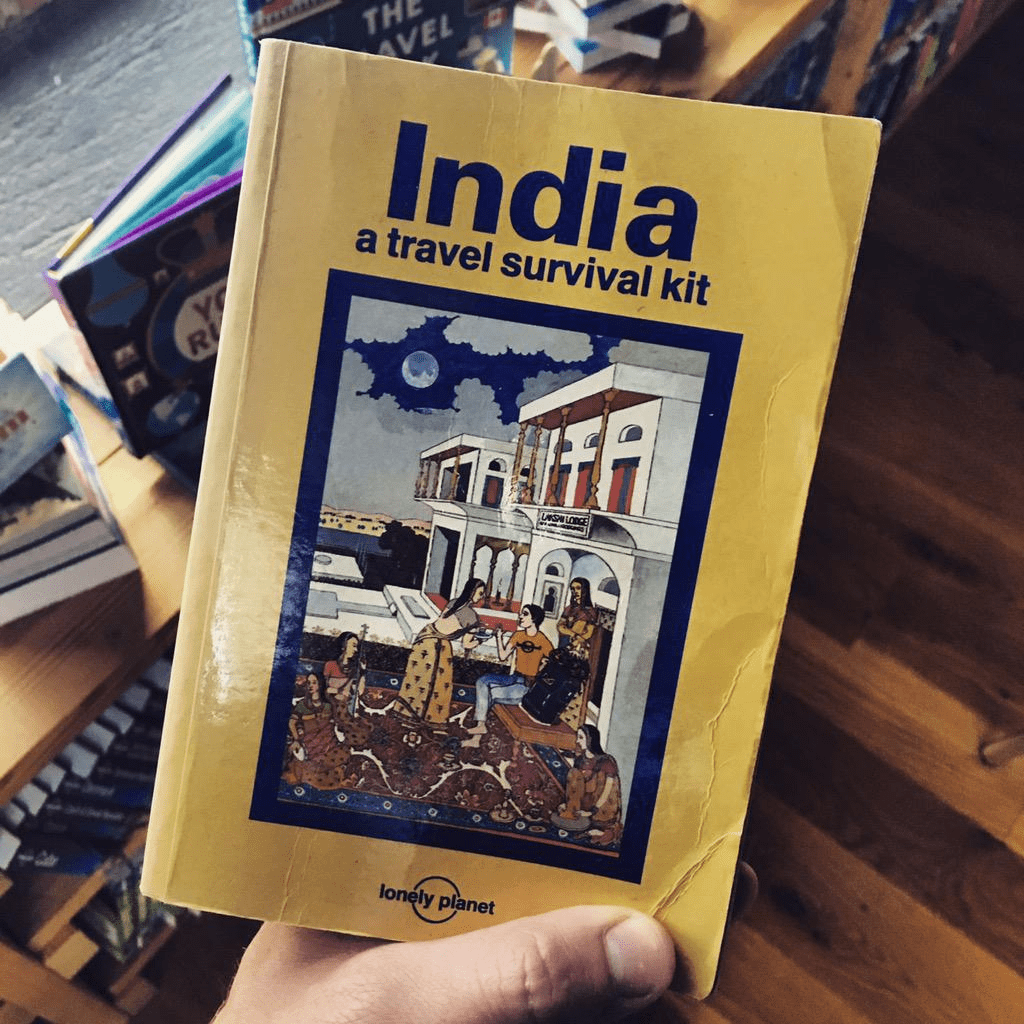
Old guidebooks are often more fun to read than newer ones. I found in a dollar bin a battered copy of Lonely Planet‘s 1987 edition of India, A Travel Surviving Kit with famous wit Geoff Crowther, Nepalese writer Prakash A Raj and drawings by Tony Jenkins. Tony Wheeler himself pens a section called Tony’s Notes, a good example of the irreverent tone of early Lonely Planet.
“Indian newspapers are generally very bland, there’s simply report events in a very straightforward manner with little comment or interpretation. But sometimes this deadpan style makes the news seem all the more remarkable. “Student killed in exam clash” reported the paper. Armed police had been brought in to prevent cheating. Students demanding the right to cheat had started to hurl stones. The police opened fire and a student died. In some states, cheating at school exams had become so common that students whose parents don’t have the cloud or bribe money to get advanced preview of the exams have demanded the right to cheat by bringing in creep sheets books or whatever to the exam. Self-immolation is a popular form of protest in India but the newspaper report of six students who tried to self-immolate themselves as a protest against the college authorities refusal to postpone their exams for 10 days was remarkable”.
“Indian money has its own special angles. For a start there is never any change. Then the change is never counted out as it is in the West, you’re simply handed a handful of change, very often if you stand there looking blank you’ll be handed more, then some more. Post offices are particularly good at this. It’s just the way change is given”.
“I arrived in Patna one evening and there was a severely dead dog on the road outside my hotel, about a meter or two from the nearest fruit stall. When I went out to dinner, it was still there, another car or two had gone over it, When I came back from dinner, it was looking pretty second hand. By breakfast time it was pretty well flat, even worse by lunchtime. By the time I left Patna that night it was more or less imprinted on the road surface. By the end of the week you could probably walk over it without even noticing it was there”.
 THE INACTIVIST