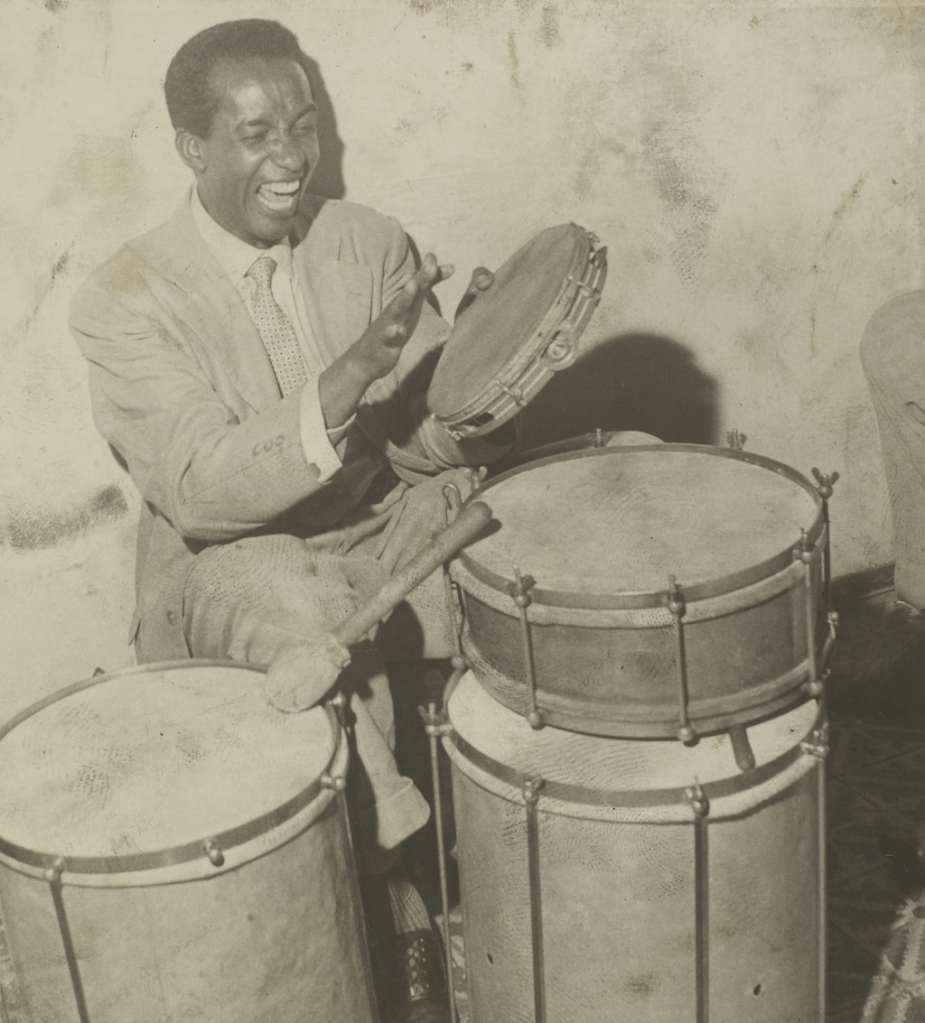
Mílton de Oliveira Ismael Silva (1905 – 1978) born in Niteroi, Rio de Janeiro, Brazil, started recording at age 20. He is one of the founders of modern Samba, both the music and the dance (Considered one of the best and most original dancers, Silva started Deixa Falar, the first Samba school.). Silva’s compositions were very successful in the 20’s and 30’s. Alas, at the peak of his fame, he shot and killed one Edu Motorneiro, a fellow hipster and bohemian. He went to jail but, good behavior and all, was freed after two years. Yet he became a recluse and was not heard again until the fifties when he staged a comeback and re-recorded some of his best loved Sambas. These new recordings became instant classics, and the most famous is perhaps the immortal “Se Voce Jurar“.
Here’s “Se Voce Jurar” original version in 1930 (?), with fellow early sambistas Nilton Basto, Francisco Alves and Mario Reis. The difficulties of recording at the time, particularly percussions, limited what could be captured of a Samba band (think of the lack of drums in early New Orleans Jazz).
In The Brazilian Sound, CM Gowan & R Pessanha write: “Legendary sambistas like Ismael Silva, Nilton Bastos, Bide and Marcal are all from the Estacio neighborhood. There are important because they appropriated the nascent genre of Samba and distinguished it clearly from Maxite and Marcha by slowing down the tempo, introducing complex modulations and phrasing over multiple bars. The form they codify was to become the reference for sambistas.”
 THE INACTIVIST