Teddy Wilson at the piano and Roy Eldridge at the trumpet were among the first to play with saxophone-like sinewy, meandering lines on their respective instruments. Wilson replaced the heavy, percussive piano sound of early Jazz with a streamlined, light touch that made for a smooth, intimate sound. It was not thought possible for a trumpet to play the long, elegant and rhythmic lines that are easy on the saxophone. Roy Eldridge changed all that by expanding the technical vocabulary of the Jazz trumpet to make it as rhythmic and varied in sound as the sax.
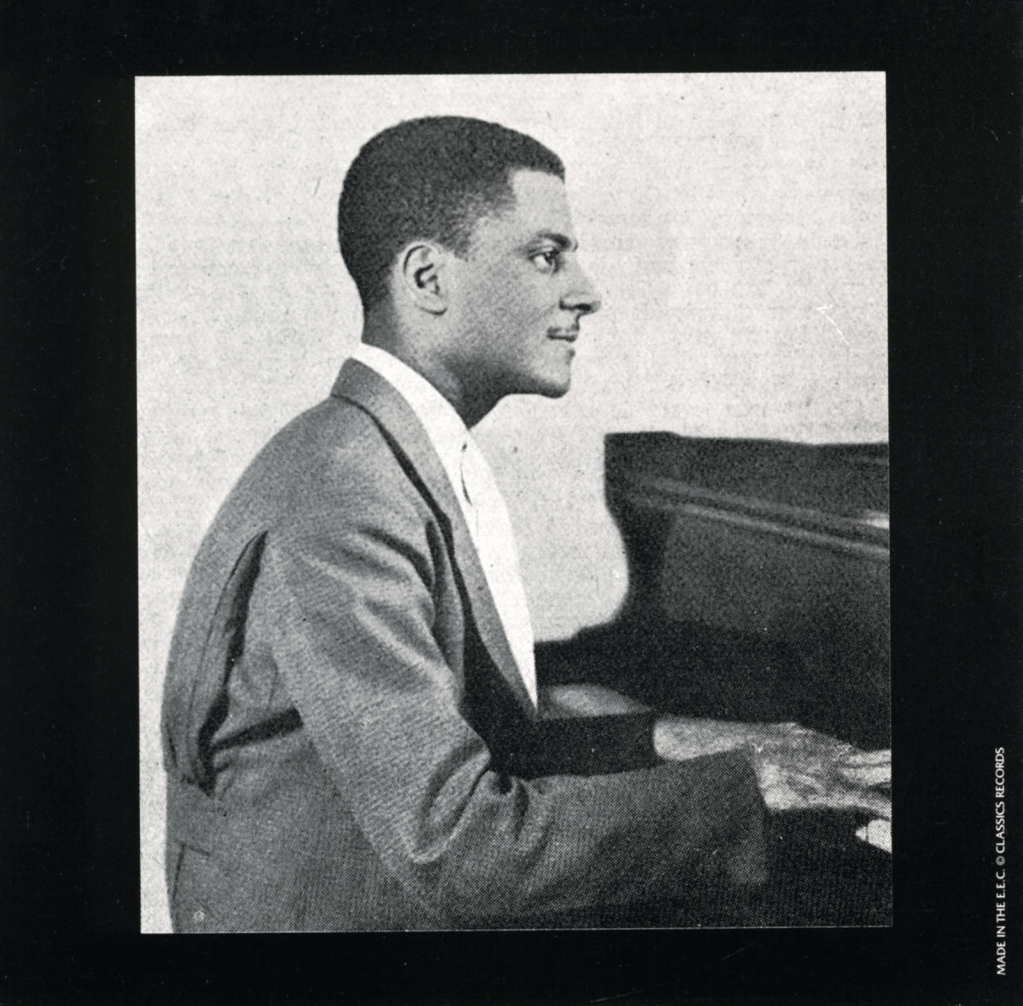
the Blues in C# minor! Under this exciting tittle hides a masterpiece of early Jazz. Big Bands were the popular Jazz of the 30s but more and more musicians were forming smaller combos for the time of a few gigs or recordings, to play, say, Chamber Music instead of the symphonic Big Band music. The best musicians loved the small format, more amenable to experimentation and improvisation.
Blues in C# minor (1936) is first remarquable by his bass riff (ostinato), repeating throughout the tune instead of the usual walking bass style commonly heard in Jazz. Teddy Wilson on the piano plays horn-based lines without ever choosing the obvious notes; not the Blues exactly but infused with them. The exact same words apply to the trumpet solo of Roy Eldridge. Chu Berry and Buster Bailey are also at their melodic best. This gem is too short.
Teddy Wilson piano, Roy Eldridge trumpet, Leon Chu Berry tenor sax, Buster Bailey clarinet, Robert Lassle guitar, Israel Crosby bass, Sidney Catlett, drums
Theodore Shaw Wilson (1912 – 1986) got his big break when he became a member of the Benny Goodman Trio (with Gene Krupa). Wilson then became the kind of session musician who seems to have played with nearly everybody in Jazz, notably as piano accompaniment for singers Lena Horne, Helen Ward, Ella Fitzgerald, Mildred Bailey, and Billie Holiday.
 THE INACTIVIST