I
You can improve the game of Monopoly by shortening it and by introducing negotiations.
For example, introduce some kind of time limit or a hard stop at the first bankruptcy or the second, the richest wins.
Distribute up to half of the property beforehand. or distribute to the highest bidder. Shuffle the deck of property card.
Make construction possible even if you don’t possess the whole set (the monopoly), they’re just a little more expensive.
You can travel between train stations; the trip is instantaneous and free.
You can negotiate immunity on some of your properties for a few rounds all the whole game or offer a share of the gains. Or make it possible to buy a property someone already bought, you are now co-proprietors and share the proceeds.
Morgage and trade. Loan and sell.
Source: Jeux & Strategie #24
II
Monopoly originated as the Landlord’s Game, an anti-monopolist educational tool about the defects of capitalism self-published in 1903 by Lizzie Magie. She was inspired by an economist called Henry George and his single-tax theory. I intend to look him up one day.
Under market pressure, “Lizzie Magie created two sets of rules: an anti-monopolist set in which all were rewarded when wealth was created, and a monopolist set in which the goal was to create monopolies and crush opponents.”
(“Monopoly’s Inventor: The Progressive Who Didn’t Pass ‘Go'”. The New York Times.2015)
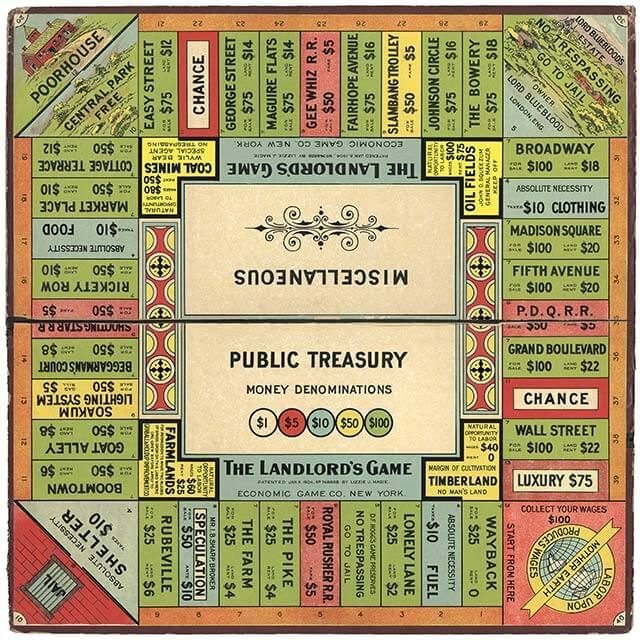
The game immediately spawned many imitators, in the end the Parker Brothers company bought the rights from Maggie and an imitator who had given his version the name Monopoly.
Monopoly is still inspiring many imitators and variants. Here are a few highlights I found. (In Italic are actual product descriptions online).
First, Let’s mention Monopoly City, a more complex version of the game that some Monopolists swear by. If you like Monopoly, that’s probably the one to try.
And then, let’s play.:
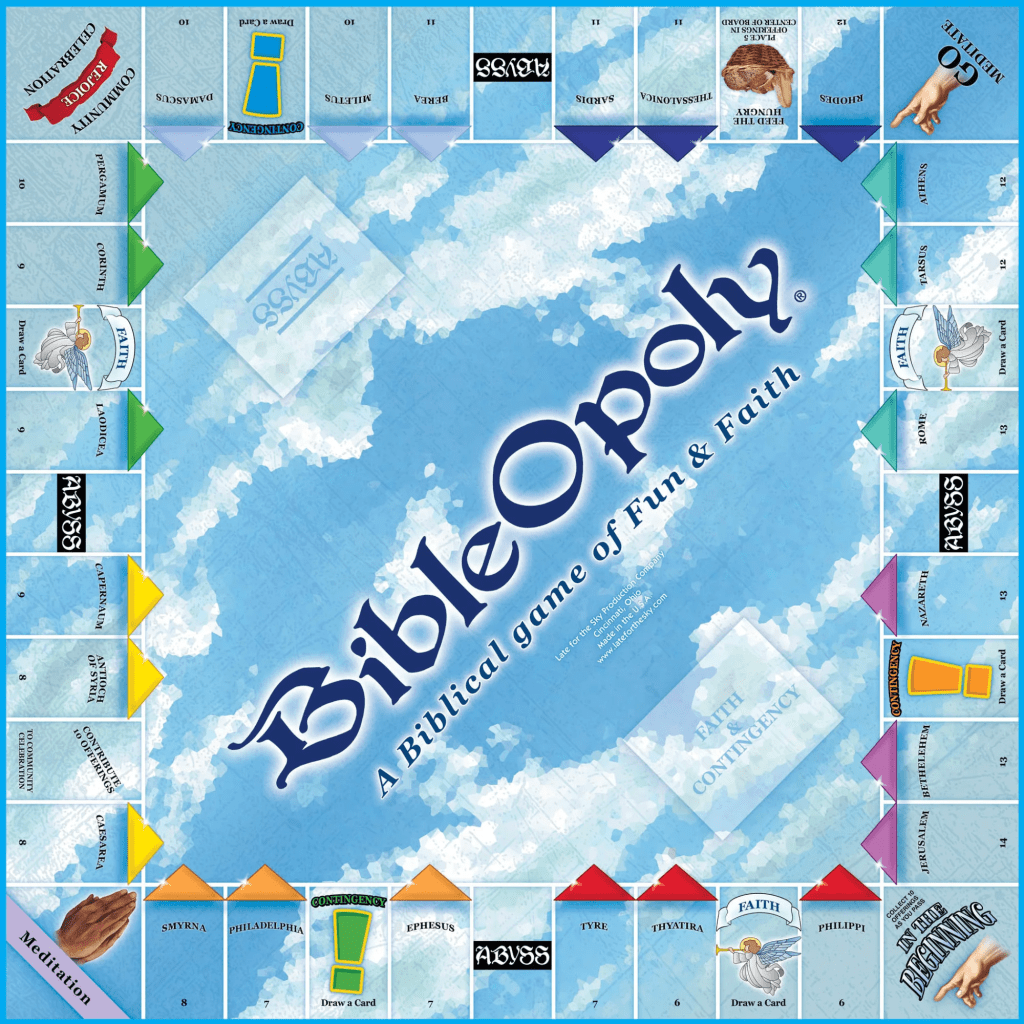
“With Bibleopoly, you can enjoy the fun of a property trading game while learning about the remarkable cities of the Bible! Start “In the Beginning”, and travel through biblical cites of Meditation, Community Celebration, and occasionally the Abyss! You can earn a Cornerstone by helping a fellow player, or but doing community service, and make offerings in order to earn the bricks and steeple you need to build a church. Watch out for the “Go Meditate” spot on the board, though–you’ll lose three turns! Also, though good deeds are rewarded, sometimes “Faith Cards” intervene. Recommended for 2 to 6 players, ages 8 to adult.
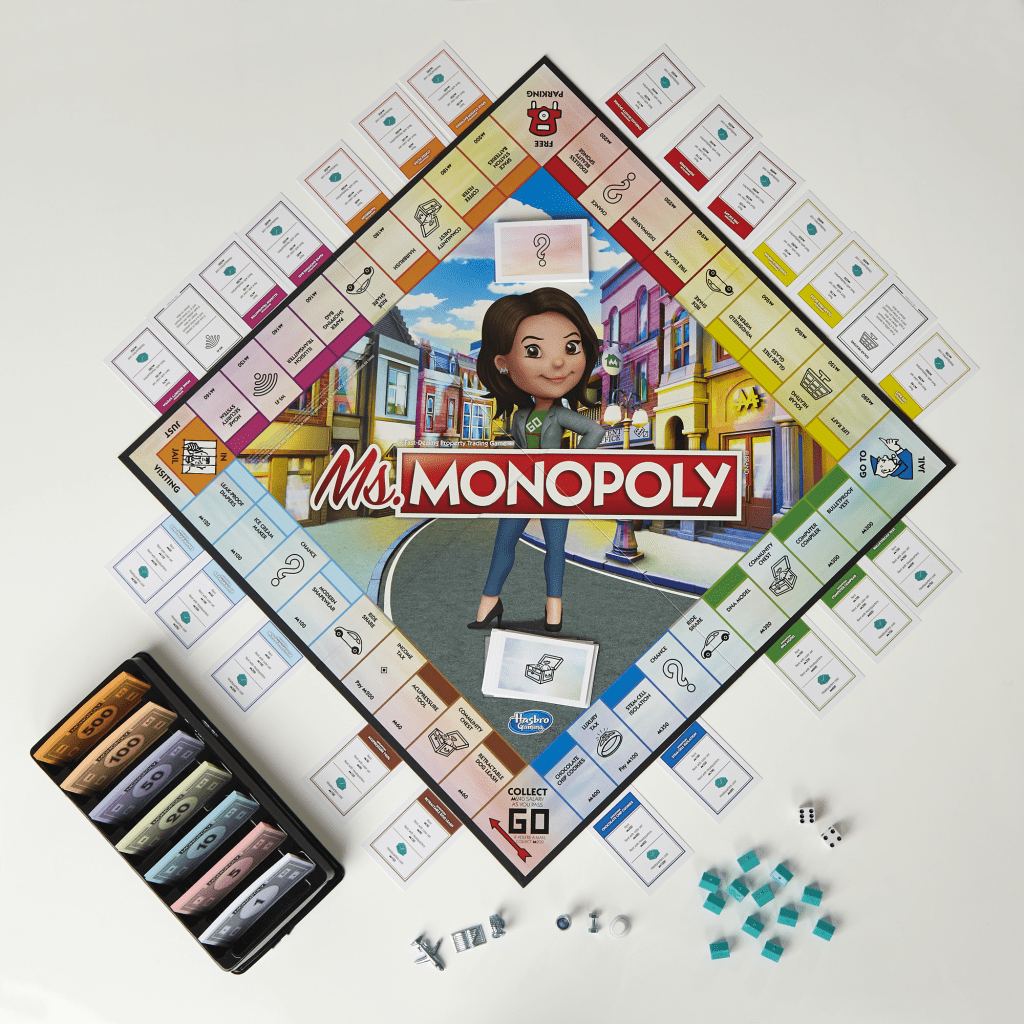
Ms Monopoly where female players make more than men. They start the game with $1,900, while men get $1,500. When passing Go, female players collect $240 whilst men receive $200.
Men, on the other hand, are rewarded for supporting women. Community chest cards describe activities that support women, like publishing an article on successful women entrepreneurs or watching the newest superhero movie with a female lead. Such cards will award more money to male players than to female players. The properties on the board have been replaced by inventions made by women including chocolate chip cookies and Spandex.
Dostihy a sázky, a variant sold in Czechoslovakia. This game comes from the authoritarian communist era (1948–1989), when private business was abolished and mortgages did not exist, so the monopoly theme was changed to a horse racing theme.
There’s also Ghettopoly, Redneckopoly, Gaypoly and a French game named Homopoly. I’ll spare you. These games have many enthusiasts and detractors online if you want.
Last but not least, here’s the amazing Kapital!
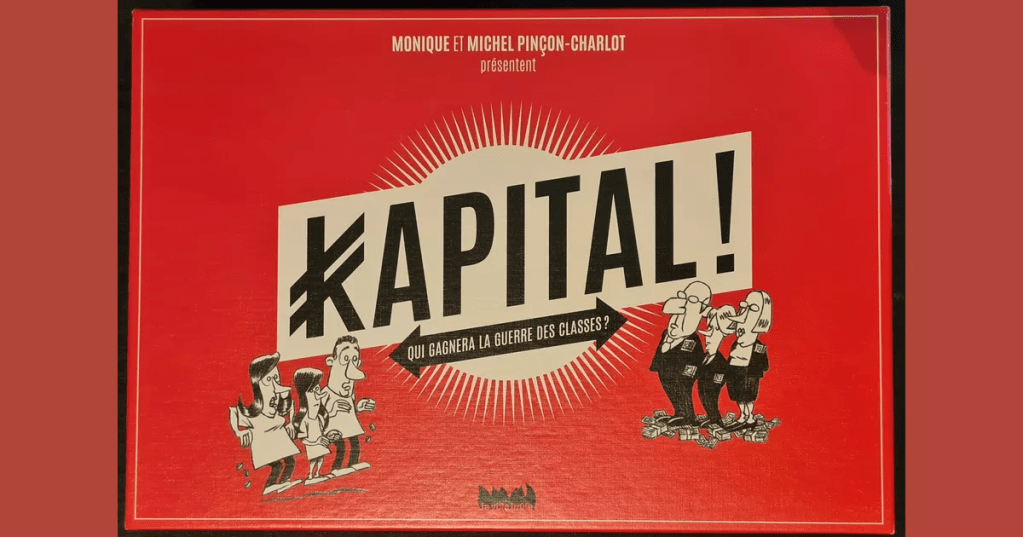
“Kapital! is much more than a board game, it is quite simply the first game of critical sociology. It allows you to understand and even experiment with the sociological mechanisms of domination, with a board game as funny as it is thrilling, brought to life by the designer Etienne Lécroart.”
“Each player starts on the same line, but one is dominant, and the others are dominated, this will determine which fate cards you can draw in each round and your starting capital. At Kapital! you can have 4 different assets: financial, social, symbolic or cultural. On your turn, roll a die and move your pawn, then draw a Destiny card.
The end of the game is triggered when a player reaches the last space: financial paradise! The winner will be the one who has raised the most funds in each of the capitals.”
At the beginning of the game, the “dominant is established by lot and will make more at every turn and automatically win the game. All the play is determined by the dice, the player has no say in what happens.
Gamers were baffled by the French game, saying on Amazon. fr: “You can’t compete with the dominant, so the game is the dominated against each other”: “All a player does is throw the dice and get cards, there is no strategy, no game really.””A inferior version of mother goose”.
 THE INACTIVIST