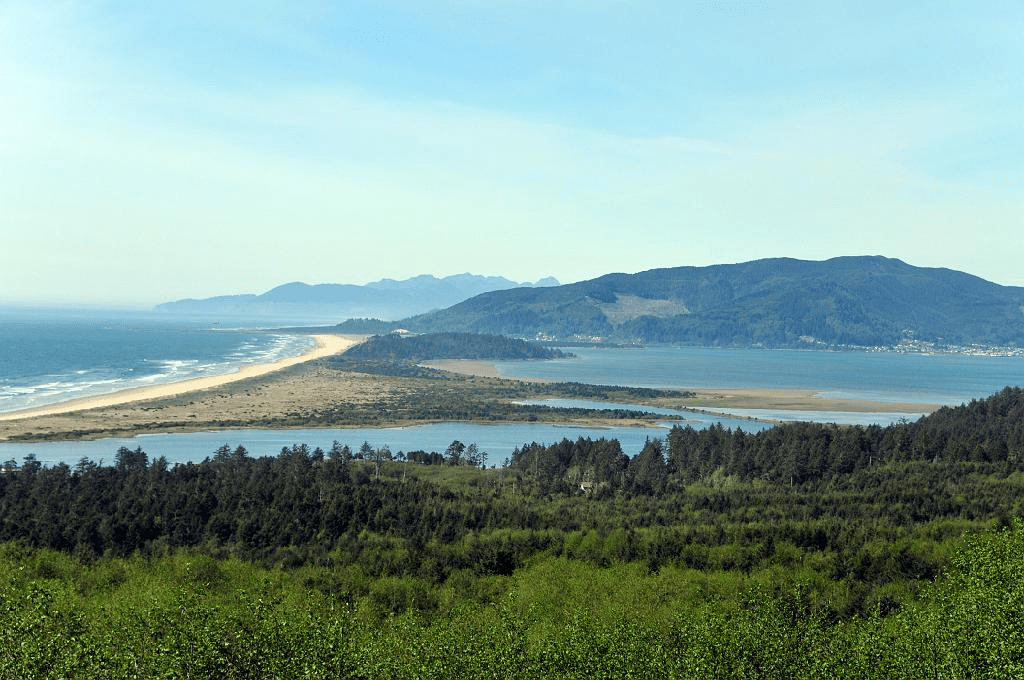
Around the mouth of salmon-bearing rivers on the Oregon Coast, between Cannon Beach and Lincoln City, lives groups of Salish people, far South of their relatives in Washington State. As a group they are called the Tillamook. Fron North to South, they are the Nehamlem, the Tillamook Bay, the Nestucca, the Nachesne also known as the Salmon River people, the Silezt or Se-la-gees and the Nach’ikáltzustiwat.
They are surrounded by non-Salish peoples and have developed a unique take on traditional Salish culture. The Trickster figure Coyote, often replaced in the North-West by Stellar Jay or Raven, is among the Tillamook South Wind the Transformer.
According to the work of Franz Boas, the culture of the Tillamook tribes was significantly different from that of their Salish relatives and was evidently influenced by the tribes of northern California. They, and their southern neighbors, were less reliant on salmon runs and more reliant on fish trapping in estuaries, hunting, and shellfish gathering.
The Tillamook had love doctors who were always women, and who could influence matters of the heart and strengthen sexual vigor.
Baby diplomats or baby doctors, who were always men, had the ability to converse with human babies in their own special language. Baby talk? I would love to witness such a session as the information provided by babies is of high quality and in the deft hands of a baby diplomat, can be used to predict future events, especially births.
Everyone’s existence begins in Babyland, somewhere on the shores on the Big Blue Lake. Babies, though naked, live a normal life there, with their own language, houses, families and the rest.
If a baby dies before learning human speech, it is returned to Babyland .
Source: Smithsonian Handbook of North American Indians Vol 7, NorthWest Coast
 THE INACTIVIST